
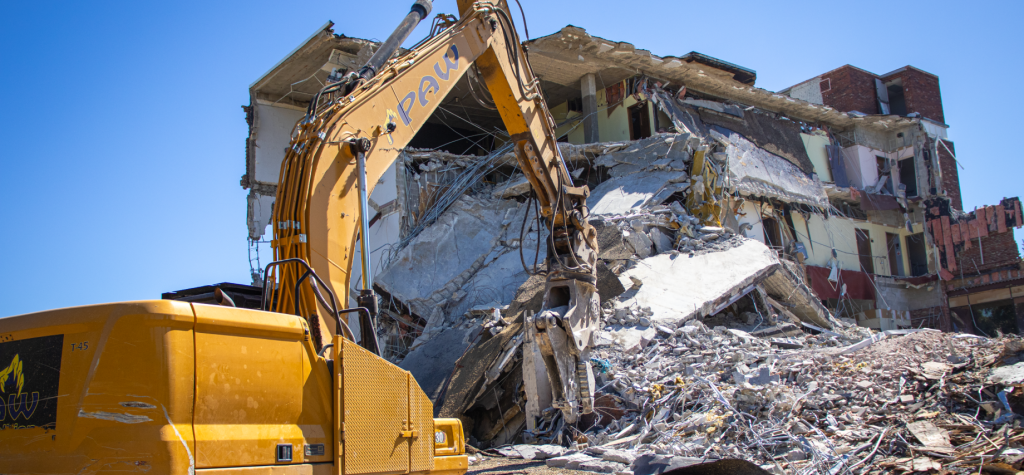
1. What Is Total Demolition?
Total demolition involves removing an entire structure from top to bottom, including walls, roof systems, structural framing, and often the foundation. The goal is to leave a clean, build-ready site that meets local code and environmental standards.
In Florida, total demolition is more complex than in many states due to sandy soil, shallow water tables, and stormwater management requirements. Contractors must also account for wind load regulations and flood zone considerations that affect how structures are dismantled.
Total demolition is commonly used for outdated homes, failing commercial buildings, and industrial facilities that no longer meet operational or safety standards.
Micro Q&A
Does total demolition always include foundation removal?
Not always. Foundation removal depends on the redevelopment plan, soil conditions, and local code requirements.
2. When Is Total Demolition the Best Option?
Total demolition is often the best choice when a building is structurally compromised, severely outdated, or economically impractical to renovate. In Florida, hurricane damage and long-term moisture intrusion frequently make repair costs exceed replacement value.
It is also preferred when zoning changes or redevelopment plans require a different footprint, elevation, or structural design. Commercial developers often choose total demolition to meet updated fire, accessibility, and energy codes.
For property owners planning major redevelopment, total demolition offers predictability and long-term cost control.
Micro Q&A
Can total demolition increase property value?
Yes. Clearing a site allows for modern construction that aligns with current zoning and market demand.
3. What Permits Are Required for Total Demolition in Florida?
Florida demolition permits are issued at the local level by city or county building departments. Requirements typically include asbestos surveys, utility disconnect letters, engineering documentation, and environmental compliance checks.
Permit requirements vary across regions like Pasco County, Hillsborough County, and Pinellas County. This is why working with a contractor experienced in local processes matters.
Professional demolition companies typically handle all permit coordination, inspections, and approvals as part of the project scope.
Micro Q&A
How long does it take to get a demolition permit?
It can range from a few days to several weeks depending on jurisdiction and project complexity.
4. How Long Does a Total Demolition Project Take?
Project timelines depend on structure size, material type, site access, and weather conditions. A small residential structure may be demolished in two to five days, while large commercial or industrial sites can take several weeks.
Florida’s rainy season and hurricane threats can cause scheduling delays. Experienced contractors plan around seasonal weather and include contingency time.
Pre-demolition planning often takes longer than the physical demolition itself.
Micro Q&A
What phase takes the longest in demolition?
Permitting and site preparation often take longer than the actual demolition work.
5. How Much Does Total Demolition Cost in Florida?
Costs are influenced by square footage, construction materials, foundation depth, hazardous material handling, and debris disposal. Reinforced concrete, steel framing, and deep foundations increase costs.
Landfill fees and recycling mandates vary by county and affect overall pricing. Urban areas typically have higher disposal and labor costs.
Accurate pricing requires a site visit and structural evaluation.
Micro Q&A
Are demolition costs tax-deductible?
In some redevelopment scenarios, demolition costs may be capitalized. Always consult a tax professional.
Plan Your Tear Down
Fast, reliable demolition services from licensed pros with decades of field experience.
6. What Happens to Debris After Total Demolition?
Debris is sorted for recycling, reuse, or disposal. Concrete is often crushed and reused, while steel is recycled. Florida contractors must comply with environmental regulations that limit landfill impact.
Responsible demolition companies prioritize material diversion and sustainability. Learn more about how PAW Demo incorporates environmentally responsible practices into our demolition process.
Micro Q&A
Is recycling mandatory for demolition debris?
Some municipalities require minimum recycling percentages, especially for commercial projects.
7. Is Total Demolition Safe Near Other Buildings?
Yes, when conducted using controlled demolition techniques and proper safety protocols. This includes dust suppression, vibration monitoring, and protective barriers.
In dense Florida markets, such as Clearwater and Tampa Bay, contractors must carefully plan demolition sequencing to avoid damage to adjacent properties. This is standard practice for teams experienced in commercial demolition in Clearwater.
Micro Q&A
Can demolition cause foundation damage next door?
Proper engineering and monitoring prevent movement or structural impact on nearby buildings.
8. What Equipment Is Used for Total Demolition?
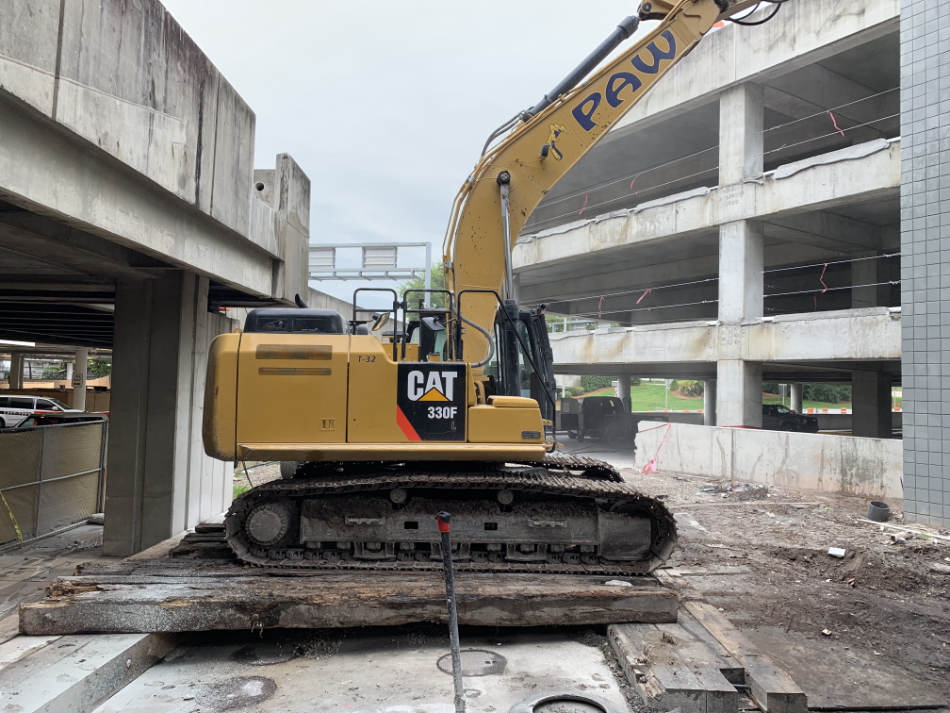
Equipment selection depends on structure height, materials, and site constraints. Common machinery includes hydraulic excavators, breakers, shears, loaders, and haul trucks.
Industrial projects often require heavy-duty equipment and specialized attachments, similar to those used in industrial demolition projects in Pasco County.
Modern equipment improves precision, safety, and efficiency.
Micro Q&A
Is heavy equipment allowed in residential areas?
Yes, but noise, access, and operating hours are regulated by local ordinances.
9. Can Total Demolition Include Site Clearing and Preparation?
Yes. Many Florida demolition contracts include grading, debris removal, soil compaction, and erosion control. This prepares the site for construction permits and foundation work.
Residential rebuilds frequently bundle demolition and site prep, especially in growth areas like Brandon, where services such as residential demolition in Brandon are common.
Combining services reduces delays between demolition and construction.
Micro Q&A
Does site prep reduce future construction costs?
Yes. Proper preparation prevents drainage issues and foundation complications.
10. How Do I Choose the Right Total Demolition Contractor in Florida?
The right contractor should be licensed, insured, safety-focused, and experienced in Florida regulations. Look for proven work across residential, commercial, and industrial sectors.
Review past projects, safety procedures, and local experience, including commercial work like commercial demolition in Pasco and large-scale operations such as industrial demolition in Brandon.
Micro Q&A
Should I get multiple demolition quotes?
Yes. Comparing scopes and timelines helps ensure accurate pricing and expectations.