
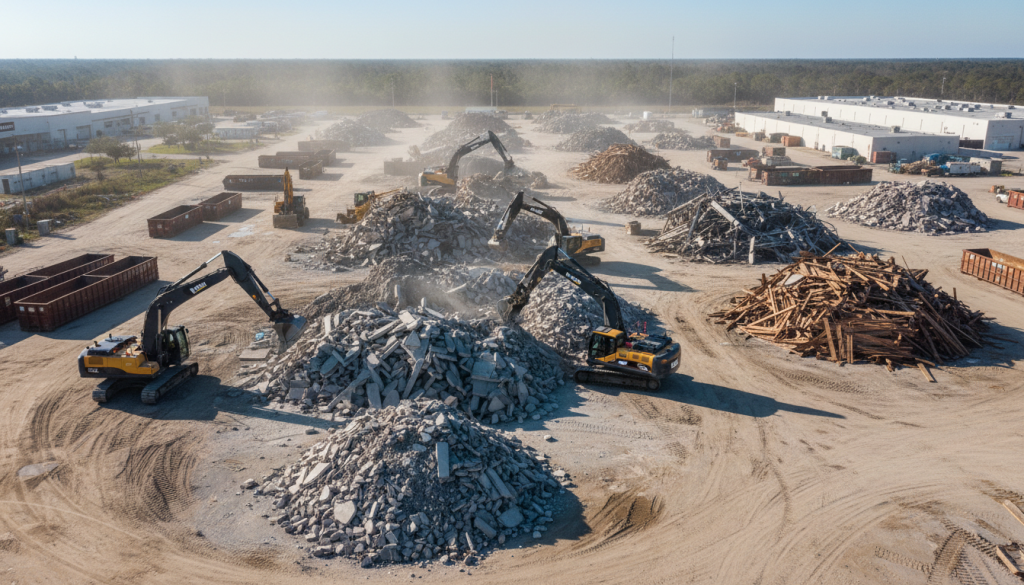
Quick Answer: Demolition waste management for large-scale projects in Central Florida requires compliance with Florida DEP Rule 62-701.730 and federal Asbestos NESHAP (40 CFR Part 61, Subpart M), source separation of materials on-site, and coordination with permitted recycling and disposal facilities. With demolition accounting for over 90% of all U.S. C&D debris, proactive planning protects your project timeline, budget, and regulatory standing.
Key Takeaways
- Demolition generates the vast majority of C&D waste. Over 90% of the roughly 600 million tons of U.S. C&D debris comes from demolition, not new construction (EPA, 2018).
- Florida has specific C&D regulatory requirements. FAC Rule 62-701.730 mandates permitted facilities, trained spotters, waste inspection protocols, and annual reporting by county of origin.
- Hazardous materials demand early identification. Asbestos, lead, and PCBs must be surveyed and removed before demolition begins under federal NESHAP rules, with 10 working days’ written notice required.
- Source separation dramatically improves recovery rates. Nationally, 76% of C&D debris was recycled or directed to next use in 2018, driven largely by concrete and asphalt recovery.
- Contractor selection should prioritize compliance expertise. Safety records, NESHAP experience, Florida DEP permitting knowledge, and fleet capacity are critical evaluation criteria for large-scale projects.
What Is Demolition Waste?
Construction and demolition (C&D) waste includes all materials generated during the teardown, renovation, or demolition of buildings, roads, bridges, and other structures. According to the EPA, demolition alone accounts for more than 90% of total C&D debris generation, while new construction accounts for less than 10%. For a closer look at what happens to demolition debris after it leaves the job site, we break that process down separately.
Common materials classified as demolition waste include concrete, asphalt, wood framing, steel and metal components, drywall, roofing materials, glass, insulation, and hazardous substances such as asbestos or lead-based paint.
Key Sources of Demolition Waste in Central Florida
Commercial building teardowns generate the majority of C&D debris in the region. When industrial property owners decommission manufacturing facilities or office complexes, they produce large volumes of concrete, steel, and mixed construction materials that require coordinated removal. Our guide to building demolition in Tampa covers the full scope of these projects.
Bridge and highway demolition creates waste streams dominated by reinforced concrete, asphalt paving, and steel reinforcement. Municipal agencies and DOT contractors must coordinate these projects to minimize traffic disruption while managing debris on tight schedules. Learn more about bridge demolition in Florida and how traffic is managed during highway demolition.
Industrial facility decommissioning often involves specialized waste streams, including process equipment, structural steel, and potentially contaminated materials that trigger hazardous waste protocols. Industrial demolition contractors in Florida must be equipped to handle these complex requirements.
Why Demolition Waste Management Matters in 2026
Environmental consequences. Unmanaged C&D debris contributes to landfill overflow, groundwater contamination, and air quality issues. In 2018, nearly 145 million tons of C&D debris were sent to U.S. landfills. Improper disposal can trigger regulatory enforcement actions against project owners and contractors alike. For more on how the industry is addressing these challenges, see the future of commercial demolition in Tampa.
Regulatory compliance. Florida regulates C&D debris disposal and recycling under Florida Administrative Code Rule 62-701.730, administered by the Florida Department of Environmental Protection (DEP). This rule requires permitted facilities, trained operators and spotters, waste inspection protocols, and annual reporting of debris recycled and disposed by county of origin. C&D debris accounts for approximately 25% of Florida’s total municipal solid waste stream, according to the Florida DEP. Understanding Florida demolition license requirements is essential before starting any project.
At the federal level, projects involving asbestos must comply with the Asbestos NESHAP (40 CFR Part 61, Subpart M), which requires thorough asbestos inspections before demolition, written notification to the appropriate agency at least 10 working days before work begins, and specific work practices for removal, wetting, containment, and disposal.
Schedule and project risk. Non-compliance can result in stop-work orders, fines, and legal liability for all parties. Proactive waste planning protects timelines and prevents costly disruptions. Demolition scheduling plays a critical role in keeping projects on track.
Demolition Waste Materials: Handling and Recovery Summary
| Material | Handling/Disposal Method | Recyclable? | Notes |
|---|---|---|---|
| Concrete | Crushed for aggregate base or sent to landfill | Yes | Largest volume component; over 95% recovery rate nationally (EPA, 2018) |
| Asphalt | Processed for reuse in paving or landfilled | Yes | Nearly 100% recyclable when uncontaminated |
| Metals (Steel, Copper, Aluminum) | Sorted and sent to metal recyclers | Yes | 98% of structural steel is recycled (AISC) |
| Wood | Reused, mulched, or landfilled | Yes | Over 75% of C&D wood currently ends up in landfills |
| Drywall | Recycled or landfilled | Limited | Gypsum can be reprocessed but contamination limits options |
| Glass | Sorted and sent to glass recyclers | Yes | Contamination from other materials reduces recovery rates |
| Insulation | Landfilled or specialized recycling | Limited | Fiberglass, foam, and mineral wool have few recycling outlets |
| Hazardous Materials (Asbestos, lead paint, mercury, PCBs) | Specialized removal by certified personnel; disposal at approved facilities | No | Governed by NESHAP, OSHA, and state hazardous waste rules |
Concrete and Asphalt Recycling
Concrete and asphalt make up roughly 85% of all C&D waste by weight, according to EPA data. Over 95% of these materials were directed to next-use applications in 2018, primarily as aggregate for road base and new construction. For project-level guidance, see our complete guide to concrete removal.
For municipal and highway redevelopment projects in Florida, recycling these materials on-site or through nearby processors reduces hauling distances and supports state sustainability goals.
Hazardous Building Materials Removal
Older commercial and industrial structures in Central Florida frequently contain asbestos insulation and tiles, lead-based paint, mercury-containing light fixtures, and PCB-containing electrical equipment. Our detailed guide on property demolition and asbestos removal in Florida covers the full process.
Under the Asbestos NESHAP, all regulated asbestos-containing material (RACM) must be removed before demolition begins if the combined amount meets or exceeds 260 linear feet on pipes, 160 square feet on other components, or 35 cubic feet off facility components. Removal must be performed by trained, certified personnel, and all waste must be sealed in leak-tight containers, labeled, and transported to a qualified landfill with documented chain-of-custody tracking.
Florida’s DEP also requires that any hazardous waste discovered at a C&D facility be immediately cordoned off, and the department, the hauler, and the generator must be notified promptly under Rule 62-701.730.
Metals, Wood, and Glass Recovery
Scrap metals represent the highest-value recovery stream in most demolition projects. Steel beams, copper wiring, and aluminum components have established recycling networks and strong market demand. According to the American Institute of Steel Construction, 98% of structural steel in demolition projects is recycled.
Wood recovery remains a challenge. More than 75% of C&D wood waste currently goes to landfills, though mulching and engineered wood product markets are expanding.
Glass recycling is viable for clean, sorted architectural glass but is limited by contamination from coatings, sealants, and mixed debris.
Landfill Diversion Strategies
In 2018, approximately 76% of all U.S. C&D waste was recycled or directed to next use, with aggregate reuse as the primary pathway. Effective diversion strategies include:
- Source separation at the demolition site. Sorting concrete, metals, wood, and hazardous materials before they enter mixed debris streams dramatically improves recovery rates.
- Partnerships with regional recycling processors. Established relationships with C&D recyclers in Central Florida (including facilities in the Orlando, Tampa, and Lakeland corridors) help ensure consistent capacity during peak demolition seasons.
- Deconstruction over demolition where feasible. Selective dismantling recovers reusable components such as doors, fixtures, and lumber, reducing landfill volume and potentially qualifying for LEED MR (Materials and Resources) credits for construction and demolition waste management. Learn more about the benefits of selective demolition and how it compares to selective demolition vs. total demolition.
Environmental Compliance in Practice
Meeting state and federal environmental regulations requires:
- Pre-demolition surveys to identify all regulated materials, including asbestos, lead, and PCBs
- Proper permitting through the Florida DEP and local county agencies (see our guides for demolition permits by county and office building demolition permits in Tampa Bay)
- Documented waste tracking and manifesting for all hazardous materials, with records maintained for regulatory audits
- Air quality and water protection controls during active demolition, including dust suppression and stormwater management
- Annual reporting of C&D debris recycled and disposed, as required by Rule 62-701.730(12)
Proper documentation protects project owners, contractors, and municipal agencies from enforcement actions and potential cleanup liabilities. For more on the environmental impact of demolition, we cover best practices in a separate guide.
Steps for Effective Demolition Waste Disposal
1. Develop a waste management plan during pre-demolition. Identify all waste streams, assign disposal outlets, and establish tracking and compliance documentation procedures before any work begins. Our Tampa property demolition preparation tips can help you get started.
2. Conduct a thorough pre-demolition survey. Inspect for hazardous materials and quantify all material types to inform handling, permitting, and disposal decisions.
3. Coordinate with contractors and waste haulers. Align debris removal schedules with demolition phasing to maintain clear work areas and prevent material accumulation that interferes with equipment operations. Demolition hauling services are a key part of this coordination.
4. Implement source separation on-site. Designate areas for concrete, metals, wood, and hazardous materials to maximize diversion and reduce mixed-waste disposal volumes.
5. Track and report all waste disposal. Use waste management tracking tools to monitor diversion rates, disposal destinations, and compliance status throughout the project. Maintain all manifests and disposal receipts for post-project audits.
How to Choose a Demolition Contractor
Selecting the right demolition contractor for large-scale projects requires evaluating several factors:
- Relevant project experience. Look for demonstrated capability with bridge, highway, and industrial demolition in Central Florida. Contractors with this background understand the coordination requirements, permitting processes, and waste handling protocols specific to the region.
- Safety record. Review their OSHA compliance history, EMR (Experience Modification Rate), worker injury statistics, and safety training programs. A strong safety record reflects operational discipline that protects workers and the surrounding communities. Learn more about demolition company safety standards.
- Regulatory and compliance expertise. Verify their experience with Florida DEP permitting, NESHAP compliance, and hazardous material handling certifications. Request references from similar projects and confirm their demolition insurance and liability coverage and bonding capacity.
- Fleet and workforce capacity. Evaluate their heavy equipment fleet, operator certifications, and current project commitments. Contractors who can demonstrate backup equipment access and flexible workforce deployment are better positioned to meet tight timelines without delays.
Frequently Asked Questions
How long does the permitting process take for a large-scale demolition in Florida?
Timelines vary by county and project complexity. Standard demolition permits in most Central Florida counties take 2 to 6 weeks. Projects involving hazardous materials, wetlands, or historic structures may require additional agency reviews that extend the timeline. Starting the permitting process early and coordinating with the Florida DEP and local building departments helps prevent schedule delays.
What happens if hazardous materials are discovered mid-demolition?
Under Florida Rule 62-701.730, work in the affected area must stop immediately. The area must be cordoned off from access, and the Florida DEP, the hauler, and the waste generator (if known) must be notified. A licensed hazardous materials contractor must then assess, contain, and remove the material before demolition can resume. Failing to follow these protocols can result in fines, project shutdowns, and legal liability.
Are there tax incentives or credits for recycling demolition materials?
Donating recovered building components (such as doors, fixtures, and lumber) to qualified 501(c)(3) organizations can provide a tax deduction. Some municipalities also offer reduced tipping fees or rebates for projects that achieve high landfill diversion rates. Additionally, projects pursuing LEED certification can earn Materials and Resources (MR) credits for documented C&D waste diversion, with thresholds typically set at 50% and 75% diversion by weight.
What training or certifications should demolition workers have?
At minimum, workers on regulated demolition sites should hold OSHA 10-Hour or 30-Hour Construction Safety certifications. Projects involving asbestos require workers trained under EPA’s Asbestos NESHAP provisions, with refresher training every two years. Lead-based paint removal requires EPA RRP (Renovation, Repair, and Painting) certification. Florida also requires that C&D facility operators and spotters receive training in waste identification and inspection procedures per Rule 62-701.730.
Can demolition debris be reused on the same project site?
Yes. Clean concrete and masonry can be crushed on-site and reused as fill, subbase material, or driveway bedding. Wood cutoffs can serve as blocking or be chipped for mulch. Brick and soil can also be reused on-site when they meet environmental standards. On-site reuse reduces hauling, lowers disposal volumes, and can improve project economics. However, any material suspected of contamination must be tested before reuse. For guidance on what comes next, see our guide to post-demolition site preparation.