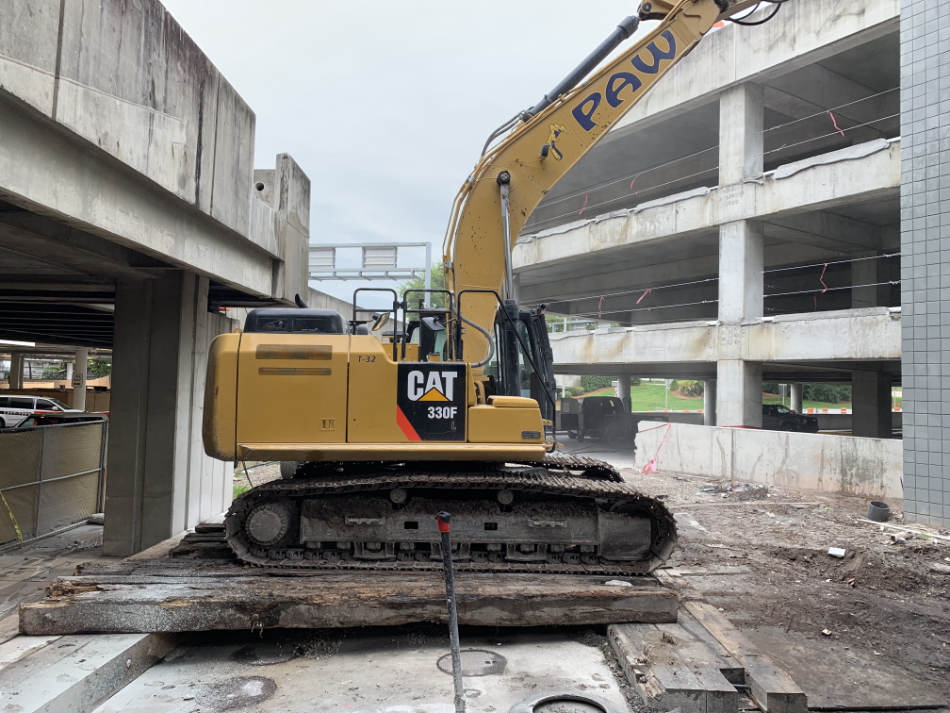
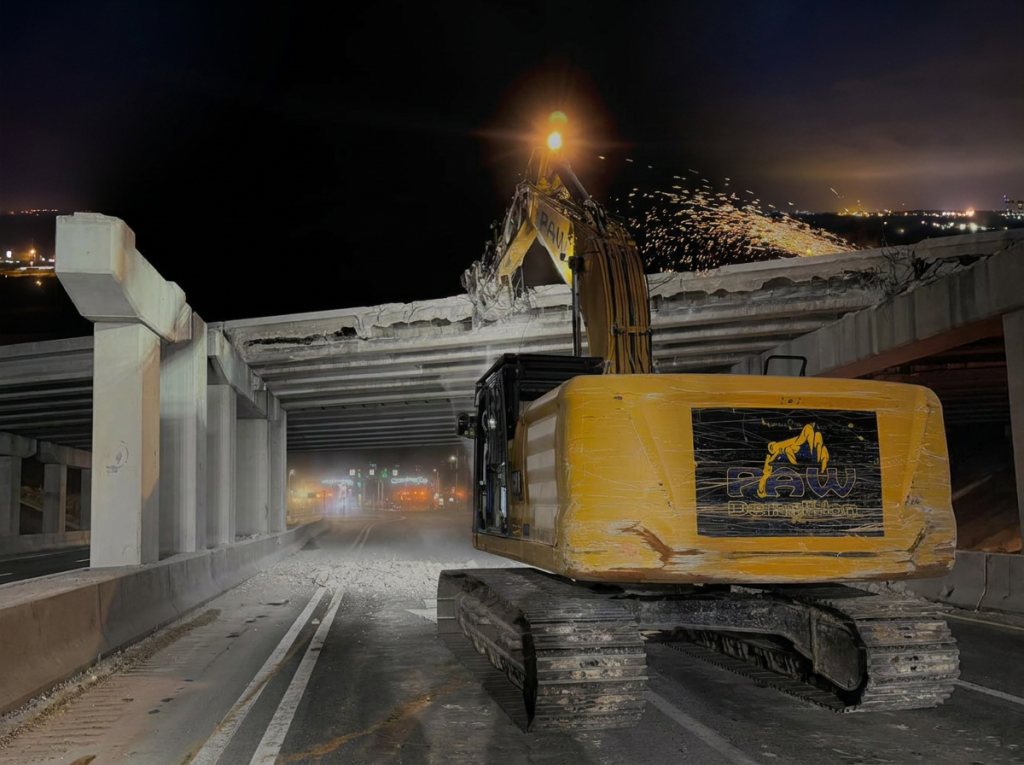
Choosing a demolition subcontractor based on price alone is one of the most reliable ways to turn a smooth commercial project into a recovery operation. A low bid from the wrong contractor can mean delayed mobilization, surprise scope gaps, a safety incident that halts your schedule, or a sub who walks when the job gets complicated.
This guide is for general contractors and developers who need to vet demolition subs the right way before the bid is awarded. Not after. The qualification criteria below apply to private commercial projects. If your project is publicly funded or involves FDOT infrastructure, the Florida demolition contractor prequalification requirements for public bids are a separate process with state-mandated criteria.
Key Takeaways
- Not all Florida demolition license classifications allow a sub to pull permits independently. The type of license on file determines who owns that responsibility.
- An EMR letter and three years of OSHA 300 logs together tell a different story than the EMR number alone. Both are worth requesting before bid evaluation.
- Asking the right scope questions before bids open reveals which contractors will create coordination gaps and which ones eliminate them.
- A complete prequalification package is a signal in itself. How quickly and completely a contractor produces it tells you something about how they run jobs.
- In-house permitting capability directly affects when your demo phase can start. There is a simple way to test for it during qualification.
Why the Qualification Step Matters More in Demolition Than in Most Trades
Demolition is the first phase of almost every commercial redevelopment project. That means a poorly qualified sub does not just affect their own scope; they set the conditions for every trade that follows. A delayed teardown pushes your foundation crew. A debris management failure creates a compliance problem. A safety incident triggers an OSHA investigation that stops the job entirely.
Unlike most subcontractor trades, demolition also carries environmental liability. Asbestos, lead-based paint, contaminated soils, and construction debris disposal are all regulated at the federal and state level. A contractor who does not understand those obligations, or who understates abatement requirements in their bid, becomes your problem the moment you award the contract.
The qualification process described here is designed to filter that risk before it reaches your project.
Step 1: Verify the Right License for the Scope
Florida issues several contractor license classifications that touch demolition work, and they are not interchangeable. The right license depends on project type, structural complexity, and whether you need the contractor to pull permits as the license holder.
| License Type | Scope | When It Applies |
|---|---|---|
| Certified General Contractor (CGC) | Unlimited structural scope, including heavy civil and site work | Large commercial teardowns, multi-structure sites, projects requiring permit-pulling authority |
| Certified Building Contractor (CBC) | Commercial buildings, typically up to three stories | Mid-scale commercial demolition within scope limitations |
| Demolition and Wrecking Specialty Contractor | Demolition only, with scope limitations | Standalone teardowns that fall within specialty license scope |
For most commercial GC projects where the demolition sub will be pulling their own permits, you want a contractor holding a Certified General Contractor or Certified Building Contractor license. A specialty license may cover the physical work but limit the contractor’s authority to self-perform permit applications. That puts the permitting burden back on you. Florida demolition license classifications and their scope limitations are worth reviewing before you finalize your prequalification criteria.
Pro Tip: Verify the license directly through the Florida DBPR license lookup before you accept a copy from the contractor. Licenses can lapse between when a contractor submits a bid and when you award the contract. A 60-second search confirms the license is active and in good standing on the date of award.
Step 2: Review Their EMR and Safety Record
The Experience Modification Rate (EMR) is a number assigned by the contractor’s workers’ compensation insurer that measures their injury and claim history relative to industry peers. An EMR of 1.0 is the industry average. Below 1.0 means the contractor has fewer and less severe claims than average. Above 1.0 means the opposite.
Most GCs establish a maximum EMR threshold as part of their prequalification requirements. A common cutoff is 1.0. Some owners on safety-sensitive projects set the bar at 0.85 or lower. Whatever your threshold, request the EMR letter directly from the contractor’s insurance carrier, not a number the contractor tells you verbally. Then verify it.
EMR alone does not tell the complete story. Ask for three years of OSHA 300 logs alongside the EMR letter. Look for pattern violations, repeat incidents in the same category, or any serious or willful citations. A contractor who had one anomalous claim year that elevated their EMR is different from one with recurring citations for fall protection or struck-by hazards on demolition sites. The insurance and liability structure for demolition projects explains what coverage gaps look like and why they matter to your exposure as the GC.
Pro Tip: When reviewing OSHA 300 logs, pay specific attention to citations under 29 CFR 1926 Subpart AA, which governs demolition operations specifically. Citations in this subpart (covering engineering surveys, utility disconnection, and structural stability) indicate the contractor is cutting corners on the fundamentals of safe demolition practice, not just general housekeeping.
Step 3: Confirm Insurance and Bonding Capacity
Request certificates of insurance naming your company as an additional insured before bid evaluation begins. Do not wait until award. Reviewing coverage at the prequalification stage lets you disqualify undercovered contractors before you spend time evaluating their bids.
At minimum, verify the following for a commercial demolition subcontractor in Florida:
- General liability: $1 million per occurrence, $2 million aggregate is a common floor for commercial projects. Owner-required minimums may be higher.
- Workers’ compensation: compliant with Florida statutory requirements.
- Commercial auto: required if the contractor is hauling debris from your site.
- Pollution liability: relevant if the project involves asbestos, lead, or contaminated soils.
Bonding capacity signals financial health in a way that insurance alone does not. A demolition contractor who can secure a performance bond for the full contract amount has already been vetted by their surety for working capital, past project performance, and management depth. That surety relationship is effectively a second opinion on whether the contractor can finish what they start.
Step 4: Evaluate Scope Coverage Not Just the Demolition Line
Most commercial demolition projects involve more than breaking concrete. Debris needs to be hauled. Concrete may need to be recycled. Permits need to be pulled. Sludge or dewatering may be required on certain site types. Each of those tasks is an opportunity to introduce a new vendor, a new coordination point, and a new place for the schedule to slip.
A demolition contractor who can self-perform (or directly manage) the full scope reduces that exposure significantly. When you are evaluating bids, look carefully at what each contractor is including in their base scope versus what they are passing to others.
Questions worth asking during qualification:
- Do you haul your own debris, or do you subcontract hauling?
- Do you have access to a concrete recycling facility, and does that affect debris removal cost?
- Will you pull all required permits, or does permitting fall to us?
- If abatement is required, do you coordinate that scope or does it need to be separately contracted?
A contractor who bundles demolition, hauling, and concrete recycling under one contract reduces your administrative load and eliminates the gap between “I thought they were handling that” and “nobody handled that.” PAW Demolition’s commercial demolition services are structured as full-scope engagements for exactly this reason.
Qualifying a Demolition Sub for an Upcoming Bid?
PAW Demolition has been executing commercial and industrial demolition in Florida for more than 40 years. We carry a 0.72 EMR, hold a Division I General Contractor license, and self-perform demolition, hauling, permitting, and concrete recycling under one contract. We are happy to walk you through our qualifications before you open bids.
Step 5: Check Project References Comparable Work Only
A strong project portfolio matters. A list of references from projects that resemble yours matters more. A demolition contractor with fifteen warehouse teardowns on their resume is a different proposition for a warehouse project than one whose experience is entirely in residential demolition or bridge work.
Request three to five references from projects of similar scope, structure type, and dollar value. Then call them. The questions that reveal the most are not about whether the work was done, but about the experience during execution:
- Did they mobilize on the date agreed?
- How did they handle unexpected conditions: buried utilities, undisclosed hazmat, structural surprises?
- Were change orders reasonable and documented, or a source of disputes?
- Did the site remain safe and compliant throughout the demolition phase?
- Would you use them again?
References who volunteer that they would use the contractor again, without prompting, are the most useful signal you can get.
Step 6: Assess Equipment Ownership vs. Rental Dependency
A contractor who owns their equipment controls their schedule in a way that rental-dependent contractors do not. On a commercial project where your demo phase is on the critical path, a sub who cannot mobilize because their excavator rental fell through is a problem that becomes your problem.
Ask directly: what equipment does the contractor own, and what would they rent for your project? A contractor with a fully owned fleet (excavators, demolition attachments, haul trucks) is not subject to equipment availability delays from third-party yards. That matters most on large-scope projects or during peak construction season in Florida, when equipment availability tightens and rental lead times stretch.
Step 7: Confirm In-House Permitting Capability
Demolition permits in Florida vary by county, and the process is rarely simple. In Hillsborough, Pinellas, and Pasco counties, applications require structural documentation, abatement certifications where applicable, utility disconnection confirmation, and sometimes traffic control plans. The timeline from application to approval can range from a few days to several weeks depending on project complexity and the reviewing jurisdiction.
A demolition contractor who handles permitting in-house removes that risk from your schedule. They know what each county requires, have established relationships with inspectors, and absorb the back-and-forth that is common in the review process. A contractor who relies on you or an outside permit expediter to manage their own permit applications creates a dependency that can delay your demo start date. The Hillsborough County demolition permit process and the Pinellas County demolition permit process each carry distinct documentation requirements that an experienced sub should know without being told.
Pro Tip: Ask the contractor to name the specific permit types required for your project and the jurisdiction’s typical review timeline. A contractor who can answer that question without hesitation has pulled permits in that county before. One who needs to look it up has not.
What a Complete Prequalification Package Should Include
Before you open bids on a commercial demolition scope, require each contractor to submit the following:
- Current DBPR license certificate with classification and expiration date
- Certificate of insurance naming your company as additional insured
- EMR letter from the insurance carrier (current year)
- OSHA 300 logs for the past three years
- Bonding capacity letter from their surety
- Project references (three minimum, comparable scope)
- Equipment list identifying owned vs. rented assets
- Scope clarification on hauling, permitting, and recycling
Contractors who respond to this request promptly and completely are showing you something about how they operate. The ones who push back, submit incomplete packages, or cannot produce OSHA logs without a two-week delay are showing you something too.
The Bottom Line on Qualifying a Demolition Contractor
- Require the full prequalification package (license certificate, EMR letter, OSHA 300 logs, bonding capacity, and comparable references) before you open bids, not after you have a preferred contractor.
- Set your EMR threshold in writing and hold to it. A contractor who cannot meet it is a schedule and liability risk regardless of their price.
- Ask every bidder the same four scope questions: who hauls, who recycles the concrete, who pulls the permits, and who coordinates abatement. The answers will differentiate the bids more than the numbers will.
- Call at least three references from comparable projects. Ask specifically whether they would hire the contractor again unprompted.
- If the demo phase is on your critical path, require a performance bond. The recovery cost of a mid-project default will exceed the bond premium on any project of meaningful size.
- Verify the license directly through DBPR on the day of award. Do not rely on a copy submitted at bid time.
FAQ
Is a demolition specialty license sufficient for a commercial project in Florida?
It depends on the scope. A Demolition and Wrecking Specialty Contractor license covers standalone demolition work within its classification, but it may not authorize the contractor to pull permits independently or take on projects that fall outside specialty scope. For most commercial projects where the sub is expected to self-manage permitting, a Certified General or Certified Building Contractor license provides broader authority. Confirm with the license holder what their certificate covers before award.
How do I get a contractor’s EMR if they do not provide it voluntarily?
The EMR is documented in a letter issued by the contractor’s workers’ compensation carrier. You can require it as part of your prequalification package. If a contractor declines to provide it, that is itself a signal. You cannot access another company’s EMR directly through NCCI, but you can make submission of the carrier letter a condition of bid eligibility.
Does concrete recycling on-site change how demolition scope is bid?
Yes. A contractor with access to a concrete recycling facility may be able to include debris removal as part of their base scope rather than a separate line item. They may also be able to supply recycled aggregate back to the project. Ask each bidder how they handle demolished concrete and what facilities they use, because it affects both the bid structure and the environmental documentation required at closeout.
Should we require a performance bond on every commercial demolition subcontract?
Not necessarily on every project, but on any demolition scope that is on your critical path or represents significant contract value, a performance bond protects you if the sub defaults mid-project. The cost of recovery (replacement sub mobilization, schedule impact, and owner claims) typically runs well above the bond premium. For smaller scopes where the risk is manageable, a thorough prequalification process may be sufficient.
What is the difference between qualifying a demolition sub for a commercial project versus a public bid?
For public bids, contractors must meet state-mandated requirements including FDOT prequalification for transportation projects over $250,000, a Maximum Capacity Rating that covers the contract value, and enrollment in state vendor systems. Private commercial qualification is more flexible and set by the GC or owner. The criteria in this article apply to private commercial projects. The Florida demolition contractor prequalification requirements cover what public agencies verify before a bid is awarded.