
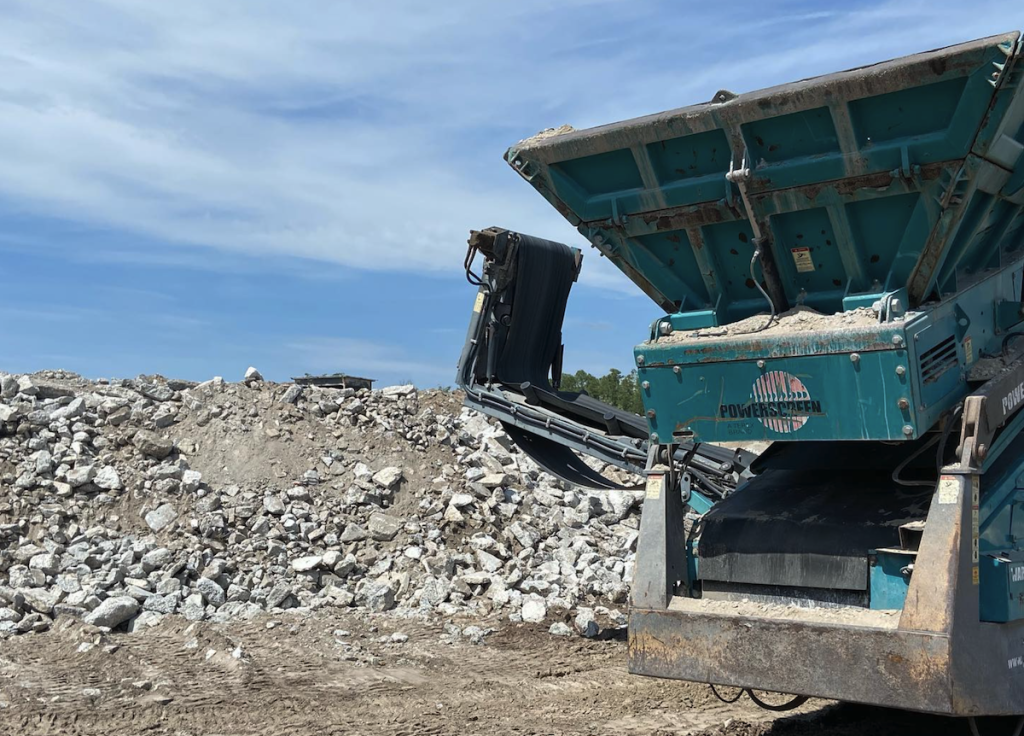
When a commercial building comes down in Florida, the concrete does not have to go to a landfill. On most PAW Demolition projects, it goes right back into the local supply chain as crushed aggregate, road base, or fill material. For developers and general contractors managing budgets and schedules, that difference matters more than most people realize.
Key Takeaways
- How concrete moves from a demolished structure to a usable recycled material
- Why on-site or nearby concrete recycling cuts hauling costs and project timelines
- What separates a demolition contractor with in-house recycling from one that subcontracts it out
- How recycled aggregate supports LEED and sustainability goals on commercial builds
- What to ask a contractor before assuming your concrete waste is handled responsibly
Why Concrete Recycling Matters on Commercial Projects
Concrete is the single heaviest material generated on most commercial demolition sites, and it is also one of the most recyclable. Recycled concrete aggregate is crushed, screened concrete debris processed to a consistent size for reuse as fill, road base, or new aggregate. The EPA’s 2018 Advancing Sustainable Materials Management Fact Sheet reports that over 95% of concrete and asphalt concrete waste generated nationally is recovered rather than landfilled, and the Construction and Demolition Recycling Association’s industry survey applies an 85% recycling factor to source-separated concrete. These are national figures; Florida-specific recovery rates can vary by county and facility. For a general contractor bidding a redevelopment or site clearing job in Florida, that is not a sustainability footnote. It is a line item that affects hauling costs, disposal fees, and how fast the site clears for the next phase of work.
PAW Demolition processes concrete from every commercial demolition and industrial demolition project in the Tampa Bay area through its own recycling facility rather than trucking it to a third party. As a demolition recycling contractor that owns its equipment, trucking, and processing facility, PAW keeps concrete recycling in Tampa moving through one continuous process instead of several outside vendors. That distinction shapes everything from timeline to cost, and it is worth understanding before your next project goes out to bid.
How Concrete Removal and Recycling Actually Works
Breaking Down the Structure
Concrete recycling starts during the demolition itself, not after. Excavators fitted with hydraulic hammers, shears, or pulverizers break slabs, foundations, and structural concrete into manageable sections as the building comes down. On projects with rebar-reinforced concrete, which covers most commercial and industrial structures, the demolition crew separates steel from concrete on site so both materials move into the right recycling stream instead of getting mixed into unusable rubble.
Sorting and Loading
Once concrete is broken down, it gets sorted from other demolition debris such as wood, drywall, and metal. Clean, separated concrete is far more valuable and easier to process than concrete mixed into a blended debris pile, which is why source separation on site is one of the biggest factors in whether recycling actually happens or whether material ends up in a landfill instead.
Hauling to the Recycling Facility
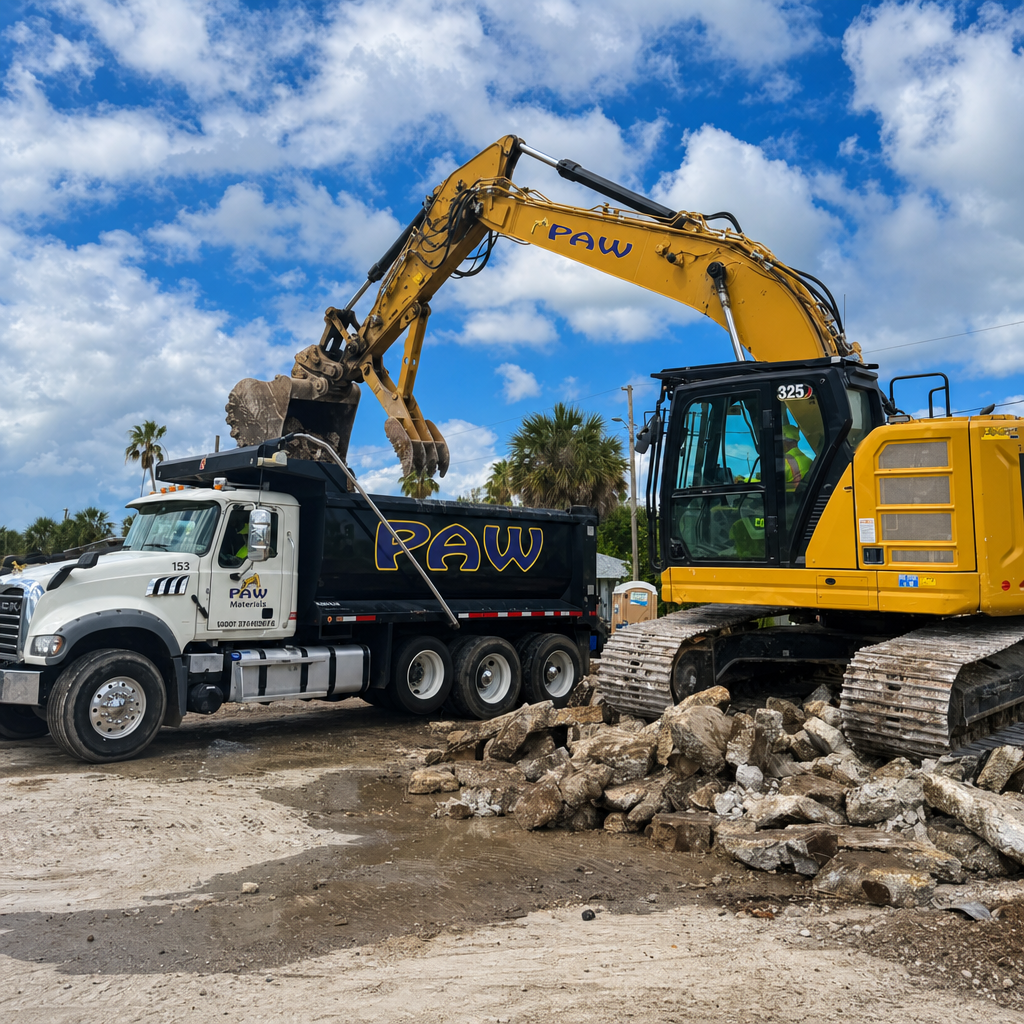
Sorted concrete gets loaded and hauled to a recycling facility, either on site if the project has the space and volume to support it, or to a dedicated processing yard. This is where a contractor’s equipment fleet and trucking capability start to matter. A contractor without in-house trucking and a recycling facility has to coordinate with outside vendors for every load, which adds cost and scheduling risk to the project.
Crushing and Processing
At the recycling facility, concrete is fed through a crusher that reduces it to smaller, uniform pieces. Screening equipment separates the crushed material by size, and magnets pull out any remaining rebar or metal fragments that were not caught during the initial sort. The output is crushed concrete aggregate, graded and ready for use.
Putting Recycled Aggregate Back to Work
Crushed concrete aggregate has a wide range of uses on commercial and infrastructure projects, including road base, fill material, drainage layers, and aggregate for new concrete production. For a developer clearing a site for redevelopment, that recycled material can often support the same site’s next phase of construction, cutting down on both disposal costs and the need to import new aggregate.
Get a Straight Answer on Your Project
Every site is different, and the right approach to concrete removal depends on the structure, the timeline, and what happens to the site next. Talk to our team before you finalize your project scope.
Why In-House Recycling Changes the Math for GCs and Developers
Many demolition contractors subcontract concrete recycling to a third-party processor. That works, but it adds a layer of coordination, cost, and schedule risk that shows up in the final invoice and the project timeline. When a contractor self-performs demolition, hauling, and recycling, the concrete moves in one continuous process instead of waiting on outside vendors and separate scheduling windows.
At the Spring Hill Water Reclamation Facility in Hernando County, a $646,541 contract completed in January 2024, PAW self-performed the demolition, hauling, and recycling in one continuous process. All concrete generated on that project was processed into aggregate at PAW’s own facility rather than sent to a third-party processor or a landfill. Based on PAW’s project experience, keeping demolition, hauling, and recycling under one contractor on a job that size avoided the scheduling gaps that come with coordinating a separate recycling vendor. That kind of vertical integration is exactly what commercial developers and municipal buyers should be looking for when they evaluate a demolition bid.
| Approach | Typical Result |
|---|---|
| Contractor owns recycling facility and trucking | One continuous process, fewer scheduling delays, lower hauling cost |
| Contractor subcontracts recycling to a third party | Additional vendor coordination, added cost, schedule dependent on outside availability |
| No recycling, concrete hauled to landfill | Higher disposal fees, no material recovery, weaker sustainability profile for the project |
Concrete Recycling and Sustainability Goals
For developers pursuing LEED certification or working with municipal clients who have sustainability requirements written into the bid specs, concrete recycling is not optional, it is documentation. Recycled aggregate reduces the need for virgin material extraction and keeps debris out of landfills, both of which are factors LEED credits account for directly. PAW Demolition recycles concrete and other demolition debris on every applicable project, because commercial and municipal clients increasingly need a contractor who can document where materials went, not just confirm that a building came down.
What This Means for Your Bid Process
When you are evaluating demolition bids for a commercial or industrial project, concrete recycling capability should factor into the comparison the same way equipment fleet and safety record do. A lower bid that routes concrete to landfill disposal can end up costing more once hauling fees, disposal fees, and schedule delays are factored in against a contractor who processes the material in-house.
The Bottom Line on Concrete Removal and Recycling
- Concrete recycling is a core part of an efficient demolition project, not an add-on service
- Ask whether your contractor processes concrete in-house or subcontracts it to a third party
- Find out how the material gets sorted, hauled, and where it ends up
- Confirm your contractor can document recycled volume if your project needs LEED or sustainability reporting
- A contractor who owns the equipment, trucking, and recycling facility can move your project faster
Frequently Asked Questions
Does recycled concrete aggregate cost less than new aggregate for a rebuild project?
Recycled aggregate typically costs less than virgin material because it skips the mining and initial processing steps. Sourcing it from the same demolition site can also reduce transportation costs.
Can concrete from a demolition site be reused on the same property?
Crushed concrete can often serve as fill, road base, or drainage material for the same site’s next construction phase. This depends on the redevelopment plan, so it’s worth discussing with your contractor before demolition begins.
Is recycled concrete aggregate strong enough to use as structural fill?
Recycled aggregate meets the same compaction and load-bearing standards as virgin aggregate for most fill, base, and drainage applications, when tested to specifications such as ASTM D6938 or FDOT’s base and fill requirements. That’s why it’s specified on commercial and municipal projects.
Does every commercial demolition project generate enough concrete to justify recycling?
Most commercial demolition projects generate enough concrete debris to make recycling worthwhile, even smaller ones. This is particularly true when a contractor already has a recycling facility and trucking in place rather than needing to set up a one-off arrangement.
Should concrete recycling be written into the demolition contract, or assumed as standard practice?
It should be written in. Recycling practices vary widely between contractors, and specifying it in the contract, along with any documentation requirements, protects the project if sustainability reporting is needed later.