
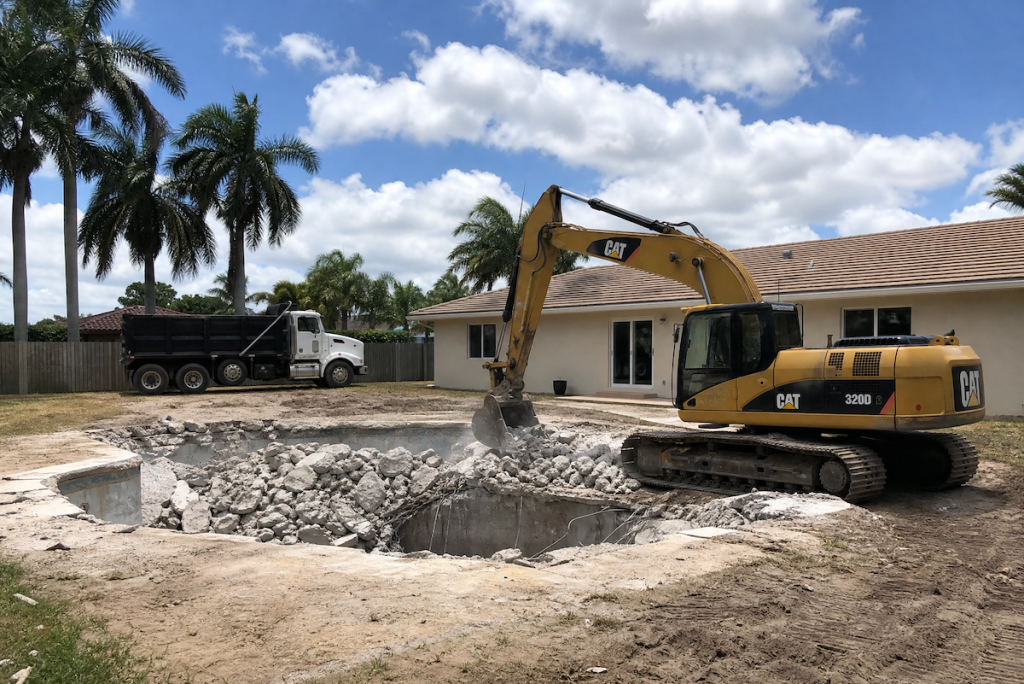
Quick Answer: Pool removal cost in Florida runs $3,000 to $10,000 for a partial fill-in and $8,000 to $16,000 for full removal, with material, size, and site access driving the difference.
A pool removal request rarely comes from someone who just wants the water gone. It comes from a pool builder whose crew found a cracked shell mid-renovation, a general contractor clearing a lot for new construction, or a developer who inherited a property with an abandoned swimming pool nobody wants to deal with. In every case, the question is the same: what does pool removal cost in Florida, and who can do it right the first time.
Swimming pool demolition cost in Tampa Bay is not a simple demo line item. It involves permitting, utility disconnection, drainage compliance, and backfill compaction standards that determine whether the site is safe to build on later. Get any of that wrong and you inherit a liability, not a solved problem.
Key Takeaways
- What partial removal (fill-in) versus full removal actually costs in Florida, and why the difference matters for future site use
- The permitting, drainage, and backfill compaction requirements that Florida counties enforce on every pool removal
- The cost factors that push a project higher: pool material, size, deck, access, and disposal
- Why pool builders and contractors increasingly subcontract removal to a full-scope demolition company instead of handling it in-house
Pool Removal Cost in Florida: Partial vs Full
Pool removal cost in Florida generally falls into two categories: partial removal (fill-in) and full removal. Pool fill-in cost sits well below full removal because less material comes off the site, but it comes with tradeoffs covered below. The ranges below reflect PAW Demolition’s Florida project pricing and typical regional market rates.
| Removal Type | Typical Cost Range | What It Involves |
|---|---|---|
| Partial removal (fill-in) | $3,000 – $10,000 | Top portion of the shell demolished, drainage holes punched in the base, remainder backfilled with debris and engineered fill |
| Full removal | $8,000 – $16,000 | Entire shell, plumbing, and any rebar demolished and hauled off site, cavity backfilled and compacted for future construction |
| Deck removal (if applicable) | $2 – $5 per square foot | Concrete or paver deck demolition, priced separately from the pool shell |
| Disposal and hauling | $150 – $500+ | Debris removal, varies by pool size and material |
Concrete and gunite pools cost more to remove than vinyl or fiberglass shells because they require heavier equipment and more labor to break down. Site access is another major variable. A pool boxed in by fencing, mature landscaping, or a tight side yard requires smaller equipment and more hand labor, which extends the timeline and the price.
Partial Removal vs. Full Removal: Why It Matters for the Next Owner
A partial removal leaves the lower shell buried in place, filled with broken concrete and engineered soil. It is faster and less expensive, but most Florida counties require the property to carry a permanent disclosure noting that a pool was demolished and filled at that location, with the area restricted to non-structural use like landscaping. Disclosure requirements vary by county, so confirm the specific rule with the local building department before choosing this option.
A full removal eliminates the shell entirely, including any rebar and plumbing, and leaves a compacted, build-ready site. For a general contractor or developer planning new construction on the lot, this is almost always the right call. Skipping it to save money up front can mean a geotechnical surprise later, when a foundation contractor discovers an old shell fragment or improperly compacted fill under a planned structure.
Permitting and Compliance Requirements
Every pool removal project in Florida requires a demolition permit, regardless of county. On top of the base permit, expect these standard requirements:
- Utility disconnection documentation for electrical and any plumbing tied to pool equipment
- A drainage or dewatering plan, since pool water often cannot be discharged directly into storm systems
- Backfill compaction testing, most Florida counties require 90 to 95 percent relative compaction in lifts of 8 to 12 inches, verified against the applicable ASTM D698 or D1557 standard
- A pre-backfill inspection and a final inspection before the permit closes out
Requirements vary by county, and PAW Demolition’s county-by-county permitting guide breaks down what to expect in Hillsborough, Pasco, and Pinellas specifically.
How Long Pool Removal Takes
| Phase | Partial Removal (Fill-In) | Full Removal |
|---|---|---|
| Permit application to approval | 1–2 weeks | 1–2 weeks |
| Draining and demolition | 2–3 days | 4–7 days |
| Backfill and compaction | 1–2 days | 2–3 days |
| Final inspection to closeout | 3–5 business days | 3–5 business days |
Most projects run three to five weeks from permit application to final inspection, though site access, county inspection scheduling, and weather can extend that window.
Get a Straight Answer on Removal Cost
Every pool site is different. Talk to a demolition expert about your project scope, timeline, and site conditions before you budget.Talk to a Demolition Expert
Why Pool Builders Subcontract Removal Instead of Handling It In-House
Pool construction crews are built for installation, not demolition. Renting excavation equipment, managing disposal logistics, and navigating compaction inspections for a single removal job eats into a schedule that is already tight. That is why many pool builders and remodelers bring in a demolition contractor to handle removal as a discrete, permitted scope of work, then step back in once the site is cleared and compacted.
PAW Demolition runs this exact model for pool builders and contractors managing swimming pool demolition cost in Tampa Bay: an owned equipment fleet, in-house permitting, and on-site concrete recycling that keeps a project moving instead of waiting on rented machinery or a subcontractor’s availability. PAW Demolition recycles concrete from every removal project rather than trucking it to a landfill, which also reduces disposal costs passed on to the client.
Cost Factors That Change the Final Number
| Factor | Impact on Cost |
|---|---|
| Pool material (concrete/gunite vs. vinyl/fiberglass) | Based on PAW Demolition project pricing, concrete and gunite typically run 30 to 50 percent higher due to demolition labor and equipment |
| Pool size and depth | Larger, deeper pools mean more material to break up, haul, and backfill |
| Site access | Restricted access requires smaller equipment and more hand labor, extending timeline and cost |
| Deck and enclosure removal | Priced separately; concrete and paver decks cost more than wood |
| Removal method | Full removal costs more up front but avoids future disclosure and build restrictions |
Concrete debris from the shell and deck does not have to be a disposal cost at all. PAW Demolition’s concrete removal and recycling process turns broken shell material into usable aggregate on site, which can offset part of the hauling expense on larger jobs.
How to Verify a Pool Removal Contractor’s License in Florida
Before signing a contract, confirm the following:
- Look up the contractor’s license number on the Florida DBPR license search to confirm it is active and matches the business name on the proposal
- Confirm the license covers demolition or general contracting, not just pool construction or resurfacing
- Ask for proof of general liability and workers’ compensation insurance that explicitly covers excavation work
- Verify the contractor pulls the permit under their own license number rather than asking the property owner to pull an owner-builder permit
The Bottom Line on Pool Removal Cost in Florida
Budget $3,000 to $10,000 for a partial fill-in or $8,000 to $16,000 for a full removal, with concrete pools, tight site access, and deck removal pushing costs toward the higher end. If the site will be developed or rebuilt on later, full removal is the safer investment. Before hiring anyone, confirm they carry proper licensing, handle permitting in-house, and own their excavation equipment rather than renting it per job. That combination is what keeps a removal project on schedule and off your punch list.
Frequently Asked Questions
Can pool removal happen at the same time as other site demolition work?
Pool removal can run alongside other site demolition work when the same contractor handles both scopes. Coordinating pool removal with broader site clearing or structure demolition lets one crew and one set of permits cover the whole job, which shortens the overall timeline compared to scheduling it as a separate project.
What happens if asbestos or contaminated soil turns up during pool removal?
Work stops until the material is tested and, if necessary, handled by a licensed abatement contractor. This is more common with older pool equipment rooms, painted decking, or buried debris than with the pool shell itself, but any contractor should have a plan for it before breaking ground.
Does removing a pool change flood zone or elevation certificate requirements?
Removing a pool can trigger new flood zone or elevation certificate requirements when the work changes site grading or drainage on a property in a flood zone. Developers planning new construction on a former pool site should confirm with the local building department whether a new elevation certificate is needed before permitting the next phase of work.
Should a pool removal contractor carry different insurance than a general demolition contractor?
A pool removal contractor needs the same insurance categories as any demolition contractor, but the coverage must specifically address excavation and backfill work, since that is where most pool removal liability originates. Confirm any contractor carries general liability and workers’ compensation that explicitly covers excavation, not just structural demolition.