When a general contractor pulls a demolition subcontractor onto a large commercial or industrial project, equipment is rarely the first thing on the evaluation checklist. Licensing, insurance, safety record, and references tend to dominate the conversation.
But whether a demolition contractor owns its equipment or rents it on a per-project basis has a direct impact on scheduling reliability, cost predictability, and overall project risk. For GCs and developers managing complex builds in Florida, this distinction matters more than most people realize.
Key Takeaways
- Demolition contractors who own their equipment can mobilize without waiting on third-party rental availability or delivery windows.
- Owned fleets give GCs more predictable scheduling because the contractor controls when machines move between jobsites.
- Equipment ownership supports better safety outcomes because operators train on the same machines consistently.
- Rental-dependent contractors face cost exposure when projects run long or require unexpected scope changes.
- Asking about equipment ownership during prequalification helps GCs filter for execution reliability before awarding a contract.
What Does “Owned Equipment” Mean in Demolition Contracting?
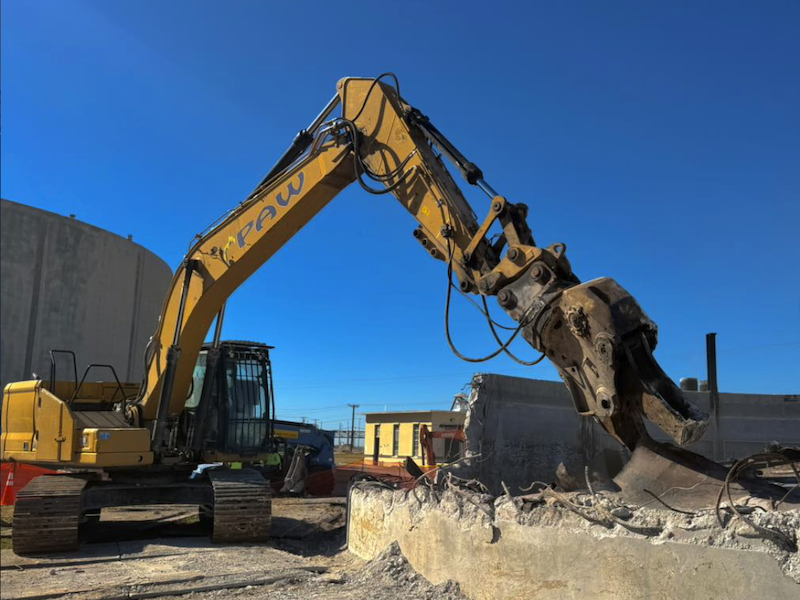
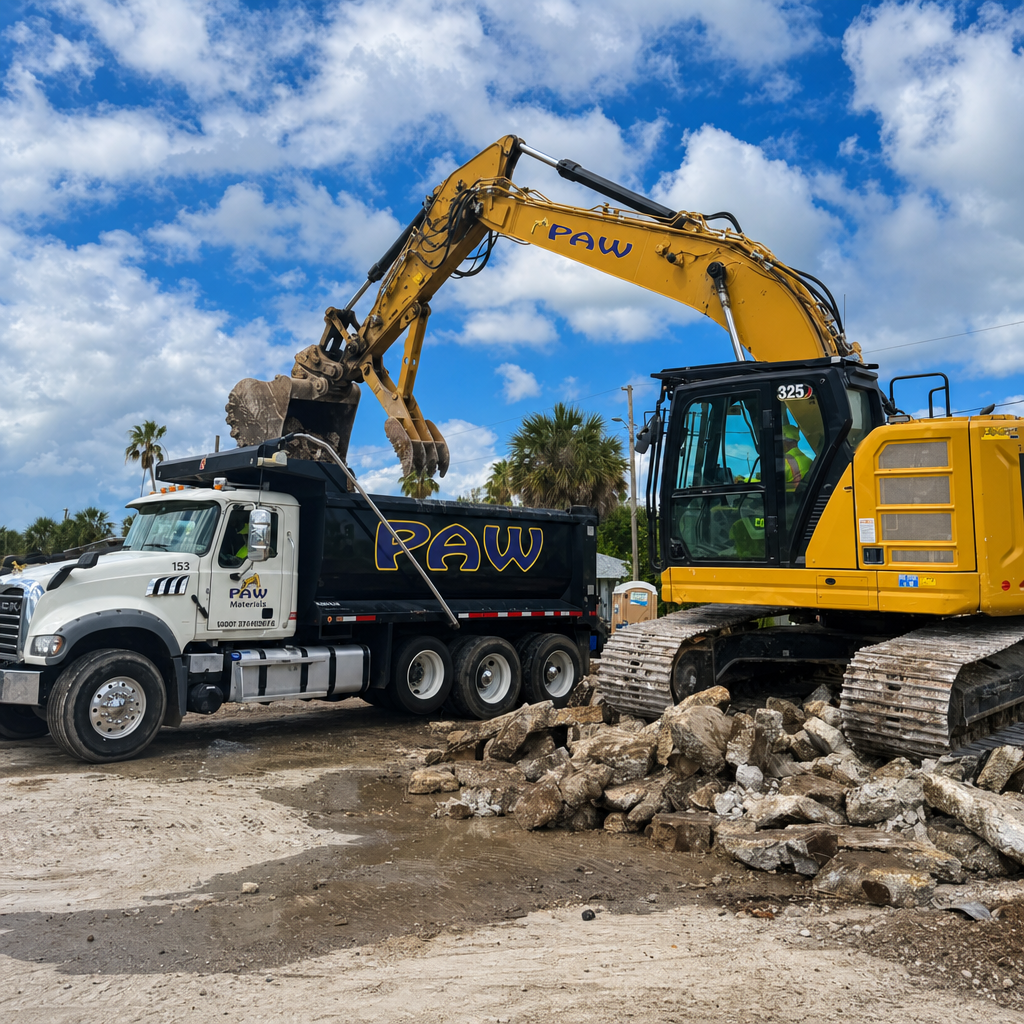
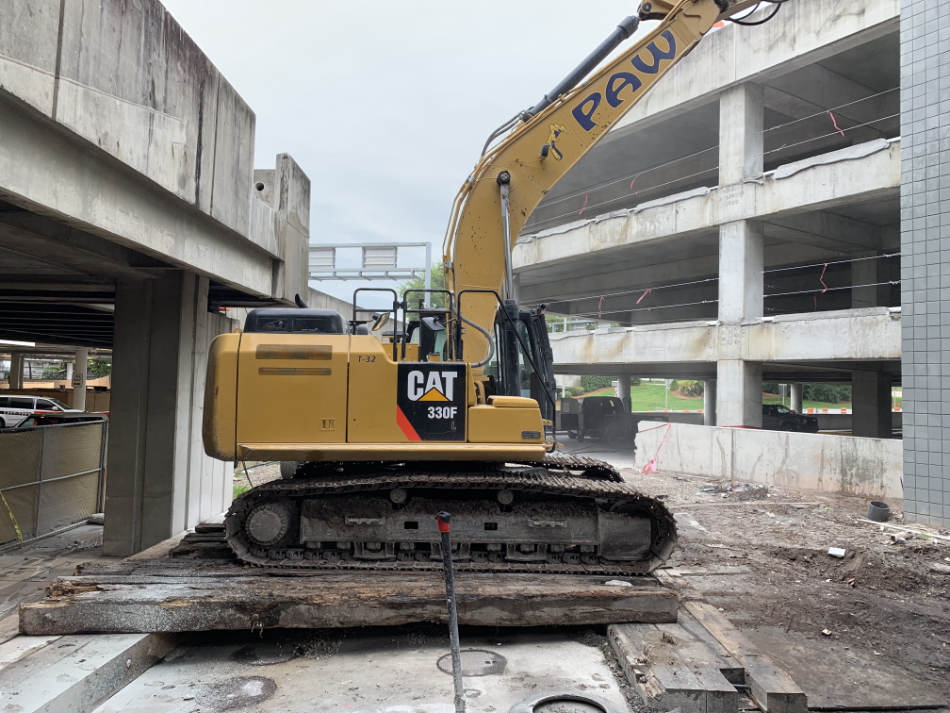
An owned-equipment demolition contractor purchases, maintains, insures, and stores its own fleet of excavators, loaders, hauling trucks, hydraulic attachments, and roll-off containers rather than renting them from a third-party equipment house on a per-project basis. This means the contractor controls when and where machines deploy, who maintains them, and which operators run them.
Why Equipment Ownership Is a Reliability Signal
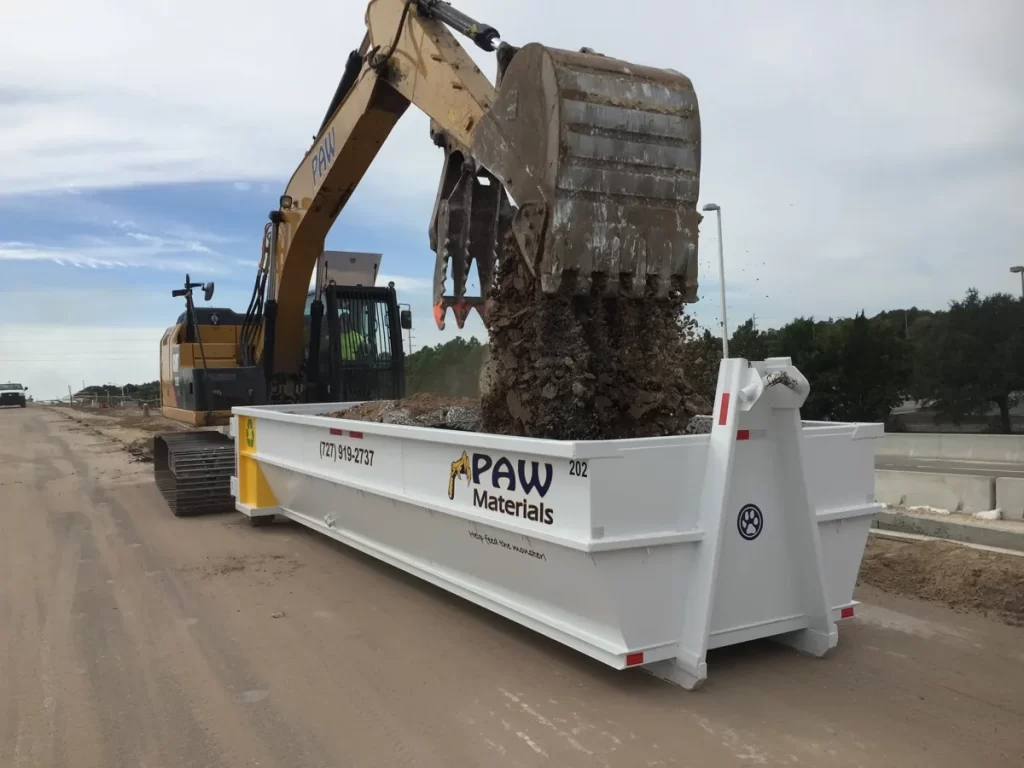 On a commercial demolition project, the schedule often hinges on how quickly the demolition contractor can mobilize, execute, and clear the site for the next trade.
A contractor that owns its excavators, loaders, hauling trucks, and attachments can dispatch equipment based on internal scheduling, not rental house availability. Rental-dependent contractors face a different reality:
- Equipment must be reserved in advance and delivered on a set timeline.
- Machines must be returned by a fixed date, regardless of project status.
- If the project runs long due to weather, permitting, or site conditions, the contractor either extends the rental at a higher daily rate or returns the machine and waits for a new one.
Either way, the GC absorbs the schedule impact.
For commercial demolition projects in Florida, where hurricane season and afternoon storms can delay outdoor work by days at a time, that flexibility is not optional. It is a scheduling requirement.
What Rental Dependency Looks Like on a Project
Consider a mid-size commercial teardown in Hillsborough County. The demolition contractor rented a high-reach excavator for 30 days. A utility relocation delay pushes the start date by 10 days.
Now the contractor has two options:
- Let the machine sit idle on site, burning rental costs with no productive work.
- Return it and re-rent when the project resumes, creating an availability gap.
The GC’s master schedule shifts. Subsequent trades get pushed back. Under standard AIA contract forms (A101/A201), liquidated damages provisions are common in commercial construction. As an illustrative range, mid-size commercial projects often see per-day rates between $500 and $5,000, though actual figures vary significantly based on total project value, the owner’s estimated losses, and negotiated contract terms. Larger projects can carry daily rates well above that range.
A contractor that owns the same machine simply redeploys it to another active jobsite and brings it back when the original project is ready. No rental extension fees. No availability gaps. No scheduling renegotiation with a third party.
Pro Tip: During prequalification, ask demolition contractors to provide an equipment list specifying which machines are owned versus rented. Contractors who own their core fleet can typically mobilize within days, not weeks.
How Owned Equipment Improves Safety Performance
Equipment familiarity is a safety factor that rarely shows up in bid documents but plays out every day on demolition jobsites.
 The Operator Familiarity Factor
When operators work on the same excavators and loaders consistently, they develop a detailed understanding of each machine’s response characteristics, blind spots, and maintenance history.
Rented equipment introduces variability. A different make or model may have:
- Different control layouts
- Unfamiliar swing speeds
- Unpredictable hydraulic response times
The operator adjusts, but that adjustment period creates risk, particularly on sites where workers, utilities, and adjacent structures are in close proximity.
What OSHA Requires and Why Ownership Helps
OSHA’s demolition standards under 29 CFR 1926 Subpart T require engineering surveys, hazard assessments, and safe work practices for mechanical demolition. The standards do not explicitly require equipment ownership, but they do require that:
- Equipment be properly maintained and inspected
- Operators be competent on the machines they use
Contractors who own their equipment control both of those variables directly. They maintain their machines on a documented internal schedule and train their crews on specific units. OSHA’s broader construction equipment standards (29 CFR 1926 Subpart CC for cranes and derricks, Subpart O for motor vehicles) reinforce that regular inspection and operator qualification are the employer’s responsibility, not a third-party rental company’s.
While no single industry study isolates equipment ownership as an independent safety variable, the NCCI’s experience rating methodology is built on the premise that an employer’s actual loss experience, compared to similarly classified businesses, reflects the effectiveness of their safety and loss prevention programs. Factors like equipment maintenance consistency and operator competency feed directly into claim frequency and severity, which are the two inputs that determine the MOD rate.
How This Shows Up in the Numbers
PAW Demolition maintains a 0.72 experience modification rate. The NCCI (National Council on Compensation Insurance) sets 1.0 as the industry baseline, meaning PAW’s MOD rate sits 28% below the expected loss level for demolition contractors of comparable size and classification. That figure reflects a long-term pattern of fewer workplace injuries and lower workers’ compensation claims.
Equipment ownership is one factor contributing to that record, because it eliminates the unpredictability of unfamiliar rental machines on high-risk jobsites.
Pro Tip: A contractor’s experience modification (MOD) rate is one of the most reliable indicators of safety performance. Ask for it during prequalification alongside their equipment list.
Cost Predictability for GCs and Developers
Rental costs introduce a variable that owned-equipment contractors do not carry. On a straightforward project, the difference may be negligible. But commercial and industrial demolition projects in Florida are rarely straightforward.
Where Cost Surprises Come From
Several common events can extend a project timeline:
- Scope changes requested by the owner or architect
- Weather delays during Florida’s storm season
- Unexpected hazardous material discoveries
- Permitting complications or inspection holds
For rental-dependent contractors, each extension means higher equipment costs that eventually flow through to the GC via change orders. A contractor that owns its fleet absorbs equipment availability internally. The daily cost of deploying an owned machine does not spike when a project runs longer than expected.
The Fixed-Price Risk
This distinction becomes especially important on projects with lump sum demolition contracts. Under a fixed-price agreement, the demolition contractor bears the financial risk of delays within their control.
A rental-dependent contractor may bid tight margins on equipment costs and then face financial pressure if the project extends. That pressure increases the risk of:
- Rushed work to meet the original rental window
- Safety shortcuts to recover lost time
- Disputes and change order claims against the GC
| Factor | Owned Equipment | Rented Equipment |
|---|---|---|
| Mobilization speed | Controlled internally; days | Subject to rental availability; days to weeks |
| Schedule flexibility | Machines redeploy between jobsites freely | Locked into rental windows |
| Cost on project extension | Stable; no per-day rental increase | Daily/weekly rental rates continue or escalate |
| Operator familiarity | Crews train on the same machines | Operators adapt to unfamiliar units |
| Maintenance control | In-house schedule and records | Dependent on rental company maintenance |
| Change order risk | Lower; equipment costs are internalized | Higher; extended rentals generate cost exposure |
Note: Actual cost and scheduling impacts vary by project size, market conditions, contract structure, and contractor. This table reflects general patterns observed across commercial demolition projects, not universal outcomes.
Need a Demolition Contractor With Its Own Fleet?
PAW Demolition self-performs with an owned equipment fleet, in-house permitting, and over 40 years of experience on commercial and industrial projects across Florida.
What Equipment Ownership Tells You About a Contractor’s Business
Owning a fleet of heavy demolition equipment requires significant capital investment. Excavators, long-reach machines, loaders, hydraulic attachments, hauling trucks, and roll-off containers are not cheap to buy, store, maintain, and insure.
A contractor that makes this investment is signaling something beyond equipment preference. They are signaling:
- Operational stability. They have the financial foundation to support a capital-intensive business model.
- Long-term commitment. They are not scaling up temporarily with rented machines for a single project and scaling back down afterward.
- Execution depth. They can staff and equip multiple projects simultaneously from their own inventory.
For GCs evaluating demolition subcontractors on a commercial bid, equipment ownership is a proxy for financial health and operational seriousness.
This matters particularly when you are selecting a subcontractor for a phased project or one that spans multiple months. You need confidence that the same contractor, with the same crews and the same equipment, will be available from mobilization through site restoration.
The Self-Performance Advantage
Equipment ownership also supports a self-performance model, where the demolition contractor handles multiple project phases internally rather than subcontracting portions of the work.
A contractor with its own excavators, haulers, and recycling capabilities can manage the full sequence as a single scope:
- Demolition
- Debris removal and hauling
- Concrete recycling
- Site preparation and restoration
This reduces coordination complexity for the GC. Instead of managing separate vendors for each phase, the GC works with one contractor who controls the full sequence.
PAW Demolition operates this way on projects like the Spring Hill Water Reclamation Facility, where the team self-performed sludge removal, demolition, hauling, and site restoration, then processed all recovered concrete at their own recycling facility.
Pro Tip: When comparing demolition bids, look beyond the base price. Ask whether the contractor self-performs hauling, recycling, and site preparation, or whether those scopes will require separate subcontractors and additional coordination on your end.
Questions GCs Should Ask About Equipment During Prequalification
Equipment ownership is not always visible in a bid package. GCs and developers should ask directly during the prequalification process. Start by confirming the contractor holds an active certified or registered license through the Florida DBPR (Department of Business and Professional Regulation), then layer in these five equipment-specific questions.
1. Which machines on your equipment list are owned versus rented?
This distinguishes between contractors who own their core fleet and those who rent most of their heavy equipment per project.
2. How do you handle equipment needs when a project scope changes mid-work?
Owned-fleet contractors can typically redeploy machines from their yard or other jobsites. Rental-dependent contractors must negotiate new rental terms.
3. Who maintains your equipment, and what is your maintenance schedule?
In-house maintenance teams and documented service records indicate higher equipment reliability and fewer breakdown-related delays.
4. Can you mobilize additional equipment if the project accelerates?
This tests depth of fleet. A contractor with a broad owned inventory can scale without third-party constraints.
5. Do your operators train on the specific machines they will use on this project?
Consistent operator-machine pairing is a measurable safety and efficiency advantage.
Bottom Line on Owned Equipment and Demolition Contractor Selection
- Add equipment ownership to your prequalification checklist. Ask for a detailed list of owned versus rented machines before evaluating any demolition bid.
- Treat scheduling flexibility as a risk management tool. A contractor that controls its own fleet eliminates the third-party rental dependency that causes project delays.
- Connect equipment ownership to safety performance. Request the contractor’s MOD rate alongside their equipment list to evaluate both factors together.
- Prioritize self-performing contractors on complex scopes. Owned equipment enables a single-vendor model for demolition, hauling, recycling, and site restoration, which reduces coordination risk.
- Evaluate long-term project readiness, not just bid price. Owned-fleet contractors demonstrate the financial stability and operational depth that complex Florida projects demand.
Plan Your Tear Down
Fast, reliable demolition services from licensed pros with decades of field experience.
Frequently Asked Questions
Does equipment ownership affect demolition project insurance requirements?
Yes, owned-equipment contractors carry additional policy types that rental-dependent contractors do not. Contractors who own their fleet typically hold inland marine insurance or equipment floater policies covering those assets against damage, theft, and loss. This coverage is visible on the contractor’s certificate of insurance and indicates a financial commitment to protecting operational capacity. Rental-dependent contractors rely on the rental company’s insurance, but coverage responsibility can become unclear if the contractor’s general liability policy does not align with the rental agreement terms.
How can a GC verify that a demolition contractor actually owns its equipment?
Title documentation and UCC lien searches are the most direct verification methods. In Florida, UCC filings are searchable through the Florida Secured Transaction Registry (administered by the Florida Department of State), which shows whether equipment has been pledged as collateral under a financing agreement. Some GCs also request copies of equipment titles or financing statements as part of prequalification packages. A UCC filing indicates a security interest, not necessarily that the contractor lacks ownership.
Are there situations where renting demolition equipment makes more sense than owning?
Yes, for specialty equipment needed on a single project phase, renting is often more practical. Examples include ultra-high-reach excavators for structures above 10 stories or specialized shears for heavy steel cutting on one-off industrial jobs. Most established demolition contractors own their core fleet and supplement with targeted rentals for unusual project requirements.
What types of equipment should a Florida demolition contractor own at minimum?
A credible commercial demolition contractor should own excavators in multiple size classes, wheel loaders, hydraulic attachments, hauling vehicles, and roll-off containers. This baseline allows the contractor to handle standard commercial teardowns, concrete removal, debris loading, and site cleanup without relying on external equipment sources for day-to-day operations.
How does equipment ownership affect project bonding requirements?
Equipment ownership directly strengthens a contractor’s bonding capacity. Surety companies evaluate owned assets, including equipment, when setting bonding limits. A larger owned fleet improves the contractor’s balance sheet and can increase the dollar value of performance bonds they qualify for. For GCs requiring bonds on demolition subcontracts, a contractor with a substantial owned fleet is more likely to meet bonding thresholds on complex or high-value scopes without financial strain.
How should a GC compare two contractors when both use a mix of owned and rented equipment?
Focus on whether the contractor owns the machines that drive the critical path of your project. Ask which specific pieces are owned versus rented and whether the rented items are specialty units for a single task or core machines the contractor depends on daily. A contractor that owns its primary excavators and hauling trucks but rents a specialty attachment for one phase is in a fundamentally different position than one that rents its entire fleet and owns only hand tools and a pickup truck.