
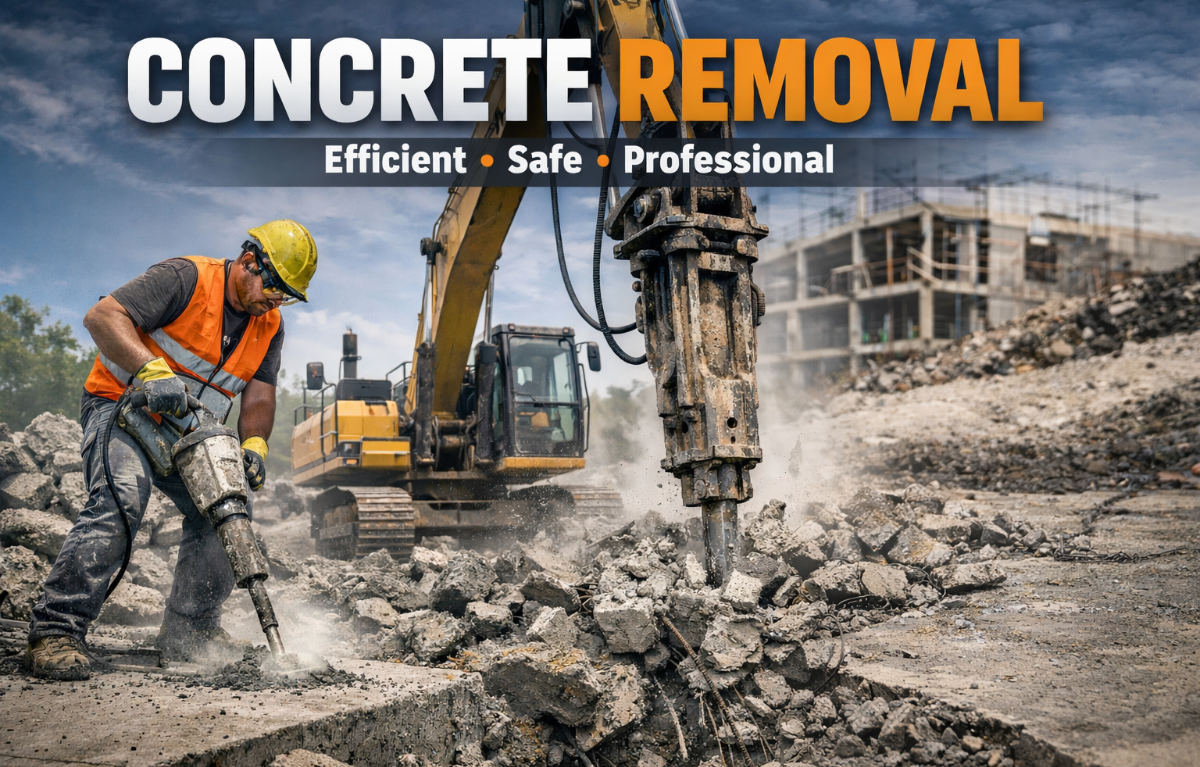
Concrete removal is a fundamental stage in many construction, renovation, and demolition projects. Whether you’re tasked with removing old foundations, driveways, sidewalks, or expansive commercial slabs, mastering proven concrete removal techniques ensures efficiency, safety, and cost-effectiveness throughout the process.
This detailed guide covers all aspects of concrete removal, from manual labor to mechanized demolition and chemical methods, helping you choose the optimal strategy for your specific project demands.
What is Concrete Removal and Why is it Important?
Concrete removal involves the demolition, extraction, and disposal of unwanted or structurally compromised concrete elements to prepare a site for new construction, landscaping, or infrastructure upgrades.
Given concrete’s extreme density and hardness, effective concrete removal requires careful planning, the right equipment, and knowledgeable application of methods to avoid unnecessary damage or delays.
Proper concrete removal also directly impacts project safety, environmental compliance, and overall budget management. Understanding the nuances of concrete removal helps contractors, property owners, and project managers execute demolition tasks with precision.
Who Needs Expert Concrete Removal Services?
- Demolition contractors and construction professionals seeking efficient and reliable concrete removal solutions.
- Residential and commercial property owners planning renovations or rebuilding involving concrete elements.
- Project managers overseeing complex demolition projects across various sectors.
- Industrial facility managers tasked with infrastructure upgrades or maintenance involving concrete structures.
- Municipal agencies coordinating urban improvement projects requiring concrete removal.
When to Avoid DIY Concrete Removal
- Lack of professional training or demolition experience.
- Projects exceeding small-scale concrete removal requiring mechanized equipment or chemical applications.
- Absence of proper safety gear and machinery necessary for heavy concrete demolition.
- Situations where concrete structures are integral and must not be compromised.
Overview of Concrete Removal Methods
The choice of concrete removal method depends on concrete thickness, scale of removal, environmental restrictions, budget, and project timeline. Here we detail each technique to help you make an informed decision:
Manual Concrete Removal Techniques
Manual concrete removal employs handheld tools like jackhammers, sledgehammers, and chisels to chip away and break down concrete surfaces. This is ideal for small, delicate, or hard-to-reach areas where precision is paramount.
Advantages: Lower cost of equipment, easy setup, and precise control over demolition.
Disadvantages: Labor-intensive, slower progress, requires stringent safety measures to avoid injury.
Mechanical Concrete Removal Methods
Mechanical removal uses advanced machinery such as hydraulic breakers, skid steers, excavators fitted with concrete crushers, and diamond blade saws. These techniques are standard for large-scale projects requiring rapid, efficient demolition.
Advantages: Fast project completion, reduced manual labor, ability to handle thick, reinforced concrete slabs.
Disadvantages: Higher upfront and operational costs, necessitates certified operators.
For comprehensive commercial concrete removal projects, our team at Hillsborough commercial demolition provides the latest machinery paired with experienced operators to deliver exceptional results.
Chemical Concrete Removal Solutions
Chemical concrete removal uses expanding agents, concrete dissolvers, or acids to fracture or soften concrete, allowing demolition without heavy noise or dust pollution. This eco-friendlier method suits sensitive environments.
Advantages: Minimal noise, reduced dust generation, and lower physical strain.
Disadvantages: Slower process, less effective on thick or reinforced concrete.
Key Best Practices for Effective and Safe Concrete Removal
1. Conduct a Detailed Site Assessment for Concrete Removal
Start by measuring the concrete thickness, evaluating its reinforcement (rebar presence), and reviewing adjacent structures and underground utilities. This prevents costly inadvertent damage during removal.
2. Prioritize Safety with Concrete Removal Preparation
Implement comprehensive safety protocols requiring PPE—gloves, helmets, eye and ear protection—and ensure machinery operators hold proper certifications. Our team adheres strictly to safety standards; learn more on our contact page.
3. Select the Appropriate Concrete Removal Equipment and Method
Match the concrete removal method—manual, mechanical, or chemical—to the project’s size, urgency, and environmental context. Small-scale repairs may benefit from manual methods, while commercial jobs demand robust mechanical solutions.
4. Plan for Responsible Waste Disposal and Concrete Recycling
Concrete debris should be promptly transported to recycling facilities where it can be crushed and repurposed as aggregate. This reduces landfill waste and aligns with sustainability regulations.
Concrete Removal Across Various Project Types
Residential Concrete Removal
Removing concrete for residential patios, sidewalks, or driveways requires attention to local noise ordinances, neighbor access, and minimal disruption. Paw Demo’s Brandon residential demolition services are tailored to meet these community-sensitive needs with professionalism.
Commercial Concrete Removal
In commercial settings where downtime costs are critical, mechanical concrete removal is preferred for speed and reliability. Explore our efficient services at Hillsborough commercial demolition to minimize disruption to your business operations.
Industrial Concrete Removal
Industrial projects often include large, reinforced concrete slabs requiring heavy machinery and strict adherence to safety protocols. Our specialized crew at Pasco industrial demolition delivers expert concrete removal solutions designed for industrial infrastructure upgrades and maintenance.
Bridge and Heavy Highway Concrete Removal
Concrete removal in bridge and highway infrastructure demands precision, advanced machinery, and adherence to stringent safety regulations, given structural safety concerns. Discover our bridge and highway expertise through Brandon bridge and heavy highway demolition.
Practical Concrete Removal Tips for Successful Project Execution
- Schedule concrete removal work during dry, mild weather to avoid slipping hazards and machinery complications from wet or icy conditions.
- Maintain clear and consistent communication between all crew members to ensure coordinated, safe operations and reduce errors.
- Perform regular equipment inspections to detect mechanical issues early and avoid costly downtime.
- Implement dust control practices such as water spraying to comply with environmental regulations and protect air quality.
- Hire experienced demolition contractors like Paw Demo to leverage advanced concrete removal equipment and expert knowledge for seamless project execution.
Frequently Asked Questions (FAQs) About Concrete Removal
-
What factors influence the cost of concrete removal?
- The main cost factors include the concrete’s size and thickness, the chosen removal method, disposal and recycling fees, labor hours, and equipment needs.
-
How does manual concrete removal compare in duration to mechanical removal?
- Manual removal is considerably slower, often taking multiple times longer than mechanical methods, making it less practical for larger projects.
-
Is chemical concrete removal environmentally safe?
- Many chemical concrete dissolvers are formulated to minimize environmental impact when used according to manufacturer guidelines and local regulations.
-
Can concrete removal be performed during winter?
- Yes, but frozen ground and icy surfaces increase safety risks and complicate removal, so mild seasons are generally preferred.
-
What happens to the removed concrete debris?
- Typically, removed concrete is crushed on-site or at recycling centers and reused as aggregate for new construction materials, reducing landfill waste.
-
How do I select the best concrete removal method?
- Evaluate project size, concrete thickness, site accessibility, safety considerations, and budget. Consultation with demolition experts ensures the best choice.
-
Are permits required for concrete removal projects?
- Many areas require permits for demolition and concrete removal, especially for commercial or large-scale projects. Always verify local regulations prior to starting work.
Conclusion: Your Trusted Partner for Professional Concrete Removal
Concrete removal is a critical but manageable part of construction and demolition when executed with the right techniques, equipment, and safety protocols. Whether your project demands manual precision, heavy-duty mechanical demolition, or innovative chemical methods, understanding their benefits and limitations will set you up for success.
At Paw Demo, we pride ourselves on delivering expert concrete removal services across residential, commercial, and industrial sectors. Our dedicated teams combine industry-leading equipment with unmatched experience to ensure every concrete removal project is completed safely, efficiently, and in compliance with all codes.
Explore our full services on the Paw Demo homepage, learn about our leadership on the Jody Gilligan leadership page, or contact us directly through our contact page to discuss how Paw Demo can partner with you for your next concrete removal and demolition project.