Quick Answer: Industrial demolition contractors ensure OSHA compliance by following 29 CFR 1926.850-860 standards, conducting thorough hazard assessments, implementing comprehensive safety training programs, and maintaining detailed documentation. The OSHA demolition standards (29 CFR 1926.850-860) are a set of federal regulations that outline safety requirements specifically for demolition operations, including engineering surveys, hazard identification, and safe work practices. This proactive approach reduces workplace injuries, prevents costly penalties, and keeps complex demolition projects on schedule—especially important given the regulatory environment in Central Florida, where local permitting and environmental requirements add additional layers of oversight.
KEY TAKEAWAYS
- OSHA compliance in industrial demolition protects workers and prevents costly violations that can derail project timelines
- Pre-demolition engineering surveys and hazard assessments form the foundation of effective safety management
- Comprehensive worker training and certification programs ensure proper handling of hazardous materials and heavy equipment
- Detailed safety plans with strict PPE enforcement minimize on-site risks and liability exposure
- Regular documentation, audits, and communication with regulatory officials maintain ongoing compliance
When a manufacturing facility closure requires complete structural teardown, or when aging infrastructure demands careful deconstruction, the margin for error becomes razor-thin. Industrial demolition projects involve massive equipment, hazardous materials, and complex structural challenges that can turn deadly without proper safety protocols. The stakes extend far beyond worker protection — a single compliance failure can halt operations, trigger investigations, and expose project owners to significant financial and legal consequences.
Why OSHA Compliance Is Critical in Industrial Demolition
The demolition industry faces some of the most dangerous working conditions in construction. Unlike standard building projects, demolition work involves unpredictable structural behavior, exposure to unknown hazardous materials, and the constant risk of catastrophic failure. According to OSHA injury and fatality statistics, demolition and construction workers experience a disproportionately high rate of workplace injuries and fatalities. The Bureau of Labor Statistics reported 1,032 fatalities among construction and extraction workers in 2024 alone, underscoring the critical importance of rigorous safety protocols.
These inherent dangers make OSHA compliance not just a regulatory requirement, but a fundamental business necessity. Project delays from safety violations can cascade through multi-phase construction schedules, affecting everything from financing arrangements to tenant occupancy dates. For commercial developers and general contractors managing large-scale projects, these disruptions represent far more than regulatory headaches — they threaten project viability and professional relationships built over decades. In Central Florida, where regulatory scrutiny and permitting requirements are particularly stringent, maintaining compliance is essential for keeping projects on track and avoiding costly delays.
The Cost of Non-Compliance
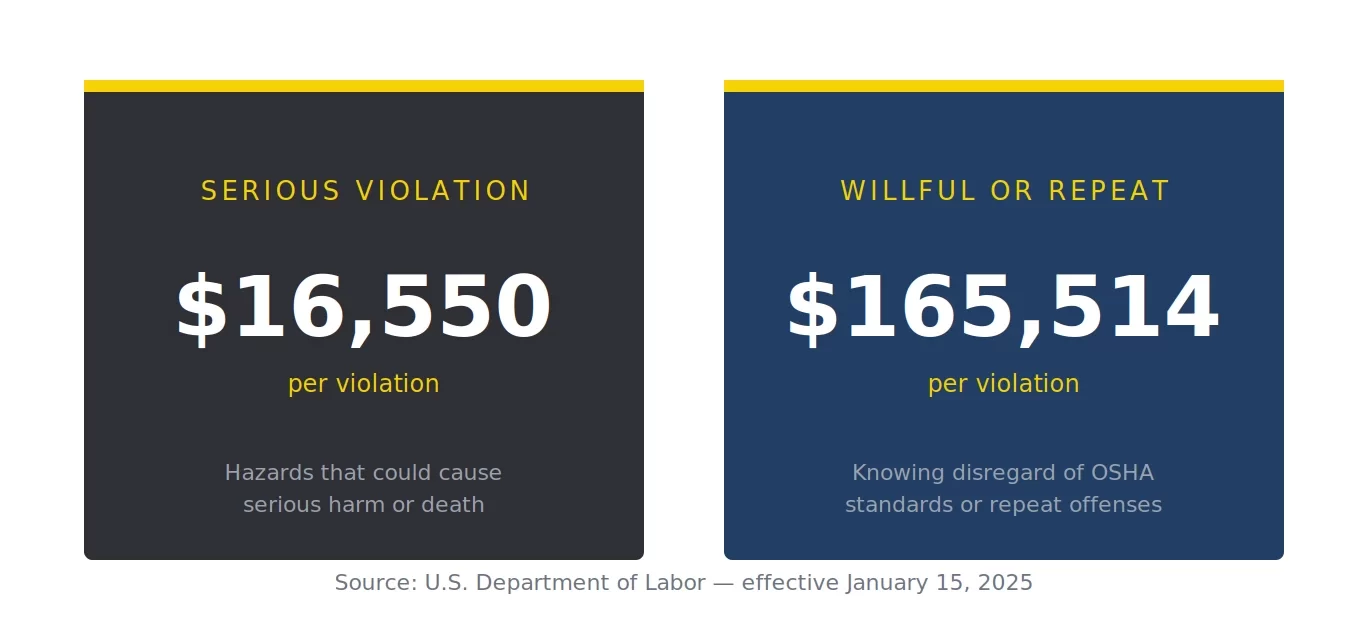
OSHA enforcement has intensified significantly in recent years, with serious violations carrying substantial financial penalties. As of 2025, OSHA maximum penalties for serious and other-than-serious violations reach $16,550 per violation, and willful or repeat violations can reach $165,514 per violation, according to the U.S. Department of Labor.
Beyond immediate fines, non-compliance creates a ripple effect of increased insurance premiums, legal liability, and damaged professional reputation. Projects that experience safety violations often face extended shutdown periods while corrective measures are implemented and approved. The financial impact extends to workers’ compensation claims, potential lawsuits, and the substantial costs associated with incident investigation and remediation. Many contractors discover that the indirect costs of a single serious violation can, in some cases, exceed direct penalties by a factor of ten or more, depending on the nature and scope of the incident.
Top Hazards in Industrial Demolition Projects
Fall-related incidents represent the leading cause of fatalities in demolition work. Industrial facilities often involve working at significant heights while managing unstable structures and heavy debris. Proper fall protection systems must account for the unique challenges of demolition environments where traditional anchor points may be compromised.
Structural collapse risks increase dramatically during industrial demolition due to the interconnected nature of facility systems. Removing load-bearing elements without proper engineering analysis can trigger unexpected failures. Additional hazards include exposure to asbestos and other hazardous materials, inadequate lockout/tagout procedures for industrial equipment, and the complex coordination required when multiple trades work simultaneously on site. Effective communication and planning between contractors, subcontractors, and specialized crews are essential to prevent overlaps and ensure everyone’s safety.
Understanding OSHA Demolition Standards (29 CFR 1926.850-860)
OSHA’s demolition standards establish specific requirements designed to address the unique risks inherent in teardown operations. These regulations go beyond general construction safety rules to address the particular challenges of working in deteriorating structures with unknown hazards. The standards emphasize prevention through planning, requiring contractors to identify and mitigate risks before they manifest on the job site.
This proactive approach aligns with the needs of commercial developers and general contractors who cannot afford surprises that derail project schedules or trigger regulatory scrutiny. 29 CFR 1926.850-860 refers to the Occupational Safety and Health Administration’s federal regulations specifically governing demolition operations. These standards outline the procedures and safety measures required for engineering surveys, hazard identification, removal of hazardous materials, and safe demolition practices.
Here are the main OSHA standards covered under 29 CFR 1926.850-860:
- 1926.850 – Preparatory operations (including engineering surveys and planning)
- 1926.851 – Stairs, passageways, and ladders
- 1926.852 – Chutes
- 1926.853 – Removal of materials through floor openings
- 1926.854 – Removal of walls, masonry sections, and chimneys
- 1926.855 – Manual removal of floors
- 1926.856 – Removal of walls
- 1926.857 – Storage
- 1926.858 – Removal of steel construction
- 1926.859 – Mechanical demolition
- 1926.860 – Selective demolition by explosives
Key Requirements for Industrial Demolition
Engineering surveys form the cornerstone of OSHA compliance in demolition work. These assessments must evaluate structural integrity, identify load-bearing elements, and determine the safest sequence for deconstruction. The survey process becomes particularly critical in industrial settings where previous modifications or deterioration may have compromised original structural assumptions.
Hazardous material identification and removal represents another fundamental requirement. Industrial facilities frequently contain asbestos, lead paint, PCBs, and other regulated substances that must be properly abated before demolition begins. Thorough preparation includes utility disconnection, environmental testing, and coordination with specialized abatement contractors.
Critical Documentation OSHA Expects
OSHA inspectors expect to find comprehensive documentation demonstrating systematic safety management. This includes detailed hazard assessments that identify site-specific risks and corresponding mitigation measures. Safety training records must document that workers understand both general demolition hazards and the particular risks associated with the specific project.
Equipment inspection logs provide evidence of proper maintenance and safety verification for the heavy machinery essential to industrial demolition. Daily safety briefings, incident reports, and corrective action documentation demonstrate ongoing attention to safety management throughout the project lifecycle.
Talk to an Industrial Demolition Specialist
Have questions about OSHA compliance for your next project? The team at PAW Demolition has the experience to walk you through what’s required, from engineering surveys to hazardous material handling.
How Industrial Demolition Contractors Ensure OSHA Compliance
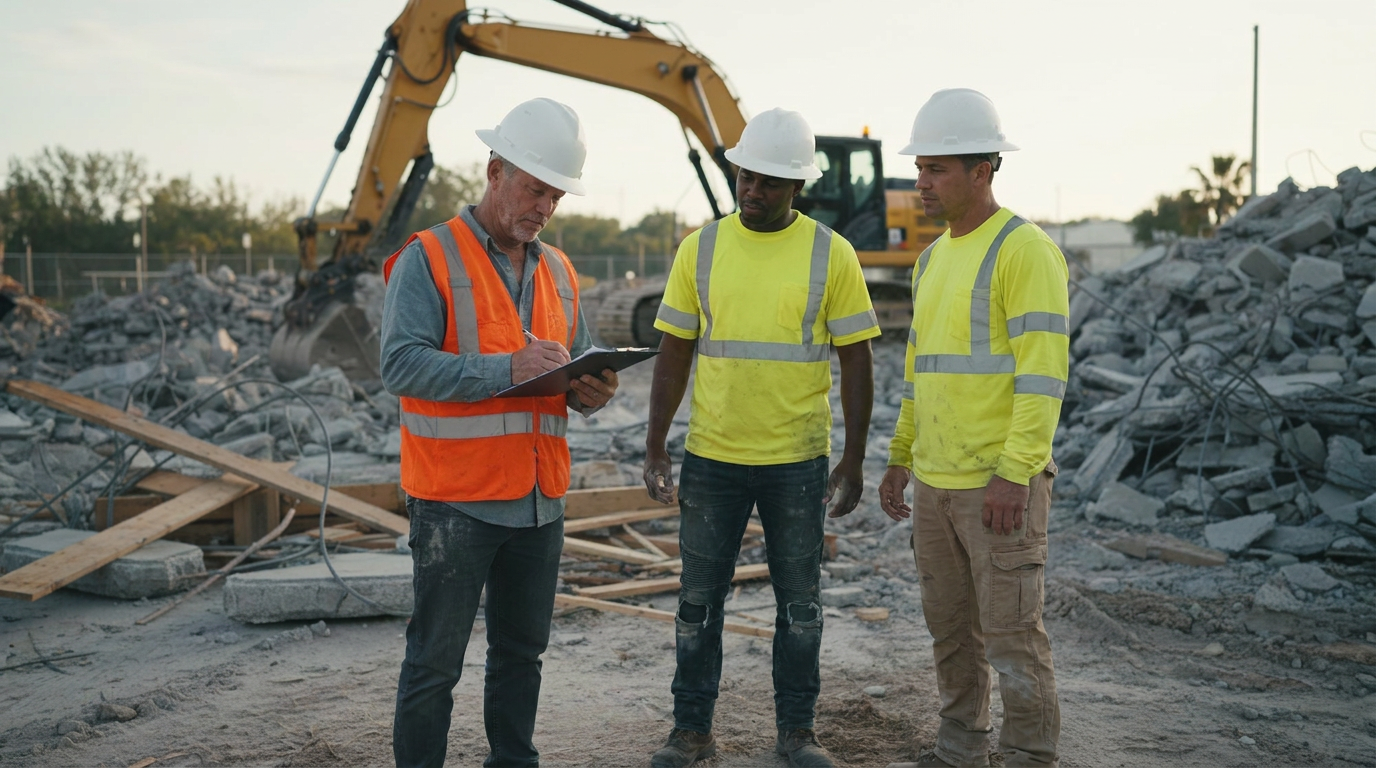
Leading demolition contractors approach OSHA compliance as an integral part of project management rather than a regulatory burden. This perspective recognizes that effective safety programs actually enhance operational efficiency while protecting workers and reducing liability exposure. The most successful contractors develop systematic approaches that can be adapted to the specific requirements of each project while maintaining consistent safety standards across their operations.
This scalability becomes particularly important for contractors handling multiple simultaneous projects with varying complexity levels, where coordination among several contractors and trades is critical to maintaining both safety and schedule.
Proactive Risk Assessments
Effective risk assessment begins before equipment arrives on site. Experienced contractors conduct detailed site evaluations that go beyond OSHA minimum requirements to identify potential hazards that could emerge as work progresses. This includes analyzing adjacent structures, underground utilities, and environmental factors that could affect demolition operations.
The assessment process continues throughout the project lifecycle, with daily safety briefings that address changing conditions and emerging risks. This dynamic approach ensures that safety protocols remain relevant as demolition progresses and site conditions evolve.
Training and Certification Programs
Comprehensive training programs address both regulatory requirements and practical skills needed for safe demolition operations. Workers must understand not only how to operate equipment safely, but also how to recognize and respond to the unique hazards present in deteriorating structures. Safety standards require ongoing reinforcement through regular refresher training and site-specific orientation for each new project. The most effective programs combine classroom instruction with hands-on training that simulates actual working conditions.
Leveraging Technology for Compliance
Modern demolition contractors increasingly rely on digital tools to manage compliance requirements efficiently. Mobile applications enable real-time documentation of safety inspections, incident reporting, and training completion. These systems provide immediate access to safety data sheets, emergency procedures, and regulatory updates.
Technology also enhances communication between field personnel and management, enabling rapid response to safety concerns and ensuring that corrective actions are implemented promptly. Digital documentation systems create comprehensive audit trails that demonstrate systematic attention to safety management.
Benefits of OSHA Compliance for Industrial Demolition Projects
OSHA compliance delivers measurable benefits that extend far beyond avoiding regulatory penalties. Projects managed with rigorous safety standards typically experience fewer delays, reduced insurance claims, and enhanced professional reputation among clients and regulatory agencies. The operational advantages become particularly apparent on complex industrial projects where coordination between multiple contractors is essential. Sites with strong safety records experience better cooperation between trades and fewer disruptions that can cascade through project schedules.
Improved Safety and Reduced Liability
A comprehensive safety program creates a culture of hazard awareness that reduces both injury frequency and severity. Workers who understand demolition hazards are better equipped to recognize and avoid dangerous situations before incidents occur. Reduced liability exposure provides significant financial benefits through lower insurance premiums and decreased exposure to workers’ compensation claims. Many contractors find that their investment in safety programs pays for itself through reduced insurance costs alone.
Boosting Operational Efficiency
Well-managed safety programs actually enhance productivity by reducing the disruptions associated with incidents and near-misses. Projects that maintain consistent safety standards avoid the costly delays associated with incident investigation, corrective action implementation, and regulatory oversight. The systematic approach required for OSHA compliance also improves overall project management by establishing clear procedures, documentation standards, and communication protocols that benefit all aspects of project execution.
Partnering with a Reliable Demolition Contractor
Selecting the right demolition contractor represents one of the most critical decisions in ensuring project success and regulatory compliance. The contractor’s safety record, experience with similar projects, and systematic approach to compliance management directly impact project risk and potential liability exposure. Commercial developers and general contractors must evaluate potential partners based on their demonstrated ability to manage complex safety requirements while maintaining project schedules and budget parameters. This evaluation process should focus on concrete evidence of safety performance rather than generic assurances.
Questions to Ask When Hiring a Demolition Contractor
What specific experience do you have with industrial demolition projects similar in scope and complexity? Request detailed information about recent projects, including safety performance, regulatory compliance history, and client references from comparable work.
How do you ensure worker competency and ongoing training? Effective contractors maintain comprehensive training programs that go beyond minimum regulatory requirements to address the specific hazards associated with industrial demolition work.
What is your approach to hazardous material identification and management? Industrial demolition projects frequently involve regulated substances that require specialized handling and disposal procedures.
Trust Signals to Look For
A proven portfolio of completed industrial projects demonstrates the contractor’s capability to handle complex demolition challenges while maintaining safety standards. Look for evidence of successful projects involving similar facility types, structural systems, and regulatory environments.
Established relationships with regulatory agencies, environmental consultants, and specialized subcontractors indicate a contractor’s integration into the professional network essential for managing complex industrial demolition projects. Permit experience across multiple jurisdictions demonstrates familiarity with varying regulatory requirements.
Talk to an Industrial Demolition Specialist
Have questions about OSHA compliance for your next project? The team at PAW Demolition has the experience to walk you through what’s required, from engineering surveys to hazardous material handling.
Frequently Asked Questions
What are the main OSHA requirements for industrial demolition?
OSHA requires pre-demolition engineering surveys to assess structural integrity and identify hazards before work begins. Fall protection systems must be implemented wherever workers face exposure to falls of six feet or greater. Hazard communication programs must ensure workers understand the specific risks associated with materials and conditions they may encounter. Personal protective equipment requirements include hard hats, safety glasses, steel-toed boots, and respiratory protection when exposure to airborne hazards is possible.
How much do OSHA violations cost demolition contractors?
Serious OSHA violations carry substantial penalties that have increased significantly in recent years. As of 2025, the maximum penalty for a serious violation is $16,550, and willful or repeat violations can result in penalties up to $165,514 per violation, according to the U.S. Department of Labor. Beyond direct fines, violations trigger additional costs including work stoppages, corrective action implementation, and increased regulatory oversight. Repeat violations face enhanced penalties, and willful violations can result in criminal prosecution. The indirect costs associated with damaged reputation, increased insurance premiums, and lost business opportunities often exceed direct penalties.
What safety equipment is required for demolition work?
Basic personal protective equipment includes hard hats rated for impact and penetration resistance, safety glasses with side shields, steel-toed boots with puncture-resistant soles, and high-visibility clothing. Fall protection equipment is required when working at heights, including full-body harnesses, lanyards, and appropriate anchor points. Respiratory protection may be necessary when exposure to dust, asbestos, or other airborne hazards is possible. Additional specialized equipment may be required based on site-specific hazards identified during pre-demolition assessment.
How often does OSHA inspect demolition sites?
OSHA prioritizes high-hazard industries including demolition for inspection activities. Sites with previous violations, worker complaints, or serious incidents face increased likelihood of inspection. Many inspections are triggered by referrals from other agencies, anonymous complaints, or observations of apparent safety violations. Contractors should maintain continuous compliance rather than relying on the statistical likelihood of inspection.
How can contractors prepare for an OSHA demolition inspection?
Maintain current documentation including engineering surveys, hazard assessments, training records, and equipment inspection logs. Ensure all workers understand site-specific hazards and emergency procedures. Verify that safety equipment is properly maintained and readily available. Designate a qualified person to interface with inspectors and provide requested documentation. Conduct regular internal audits to identify and correct potential compliance issues before they attract regulatory attention.