Industrial demolition is not a job you can hand off to any contractor with a low bid and a bulldozer. When your project involves a wastewater facility, a power plant, a manufacturing complex, or heavy structural steel, the wrong subcontractor creates delays, liability, and serious safety risk. Choosing the right one requires more than checking a license number. It requires understanding exactly what qualifications, credentials, and operational capabilities separate a capable firm from one that will cost you far more than the spread on the bid.
This guide covers what general contractors, developers, and project owners should evaluate before awarding industrial demolition work in Florida.
Key Takeaways
- Florida law requires a Division I General Contractor license for industrial demolition involving structures over 50 feet or buildings of any height.
- MOD rate (also called EMR) is one of the most reliable indicators of a contractor’s real-world safety performance. An industry average is 1.0; below 0.75 reflects a consistently strong safety program.
- Outsourced crews introduce unverified labor onto your project. Ask directly whether the sub uses its own employees on every job.
- In-house permitting capability reduces scheduling risk on complex industrial projects where permit timelines are unpredictable.
- Equipment ownership matters for industrial work. A contractor with an owned fleet is not subject to rental availability or third-party scheduling conflicts.
Why Industrial Demolition Requires a Specialized Subcontractor
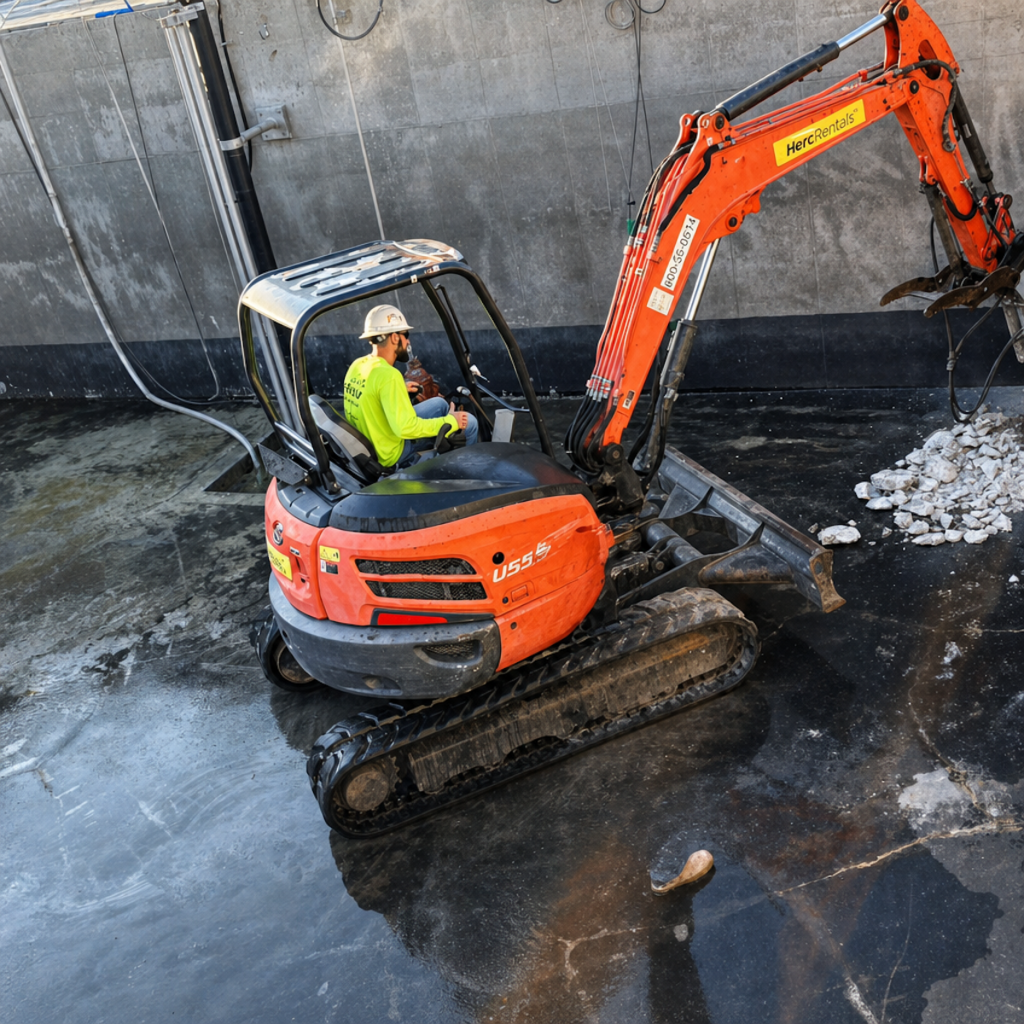
Commercial and industrial demolition share some methods, but industrial projects introduce hazards and complexity that require a different level of expertise. Wastewater treatment facilities may involve confined space entry, residual sludge, and chemical exposure. Manufacturing buildings often contain asbestos-containing materials, lead paint, and heavy embedded equipment. Structures in active industrial zones may require demolition sequencing that keeps adjacent operations running.
General demolition subs that primarily handle retail strip-outs or residential tear-downs may technically hold the right license but lack the field experience to manage industrial risk. The vetting process needs to reflect that difference.
Licensing Requirements for Industrial Demolition in Florida
Under Florida Statute Section 489.105(3), demolition of any building or residence and of structures over 50 feet in height requires an appropriately licensed Division I contractor. Florida’s Division I classification covers general contractors, building contractors, and residential contractors. For industrial demolition specifically, contractors may also hold an Industrial Facility Contractor license, which covers the construction, modification, and demolition of uninhabitable industrial structures used for energy, gas, or chemical production.
Before awarding a subcontract, verify the firm’s license is active, check the category matches the scope of your project, and confirm there are no disciplinary actions or complaints on file through the Florida Department of Business and Professional Regulation (DBPR) at myfloridalicense.com.
Pro Tip: The DBPR license search shows not only active status but also the qualifier’s name, the license issue date, and any complaint history. A firm that holds an active license with a clean record and a qualifier with extensive tenure is a meaningful indicator of operational stability.
How to Evaluate Safety Records: Understanding MOD Rate
The single most useful number for evaluating a demolition subcontractor’s safety history is the Experience Modification Rate, known as MOD rate or EMR. This is a workers’ compensation insurance metric calculated by the National Council on Compensation Insurance (NCCI) based on a rolling three-year claims history compared to industry averages for similar businesses.
An EMR of 1.0 is the industry average. A score below 1.0 means the contractor has fewer and less severe claims than the average firm in their class. EMR scores below 0.75 are typically achieved only by contractors with robust safety programs and consistently low claim frequency over multiple years.
For industrial demolition, this number carries real weight:
- Many project owners and public agencies set a maximum EMR threshold for subcontractor prequalification, often 1.0 or lower.
- Government contracts frequently require EMR disclosure and may disqualify firms above a set threshold.
- Prequalification platforms like ISNetworld, Avetta, and Veriforce pull EMR as a core compliance signal.
- A contractor with a high EMR signals more frequent incidents, which is a direct indicator of on-site risk.
Ask every subcontractor candidate for their current EMR in writing. A firm with nothing to hide will provide it without hesitation. A 0.72 MOD rate, for example, reflects performance 28% safer than the industry average and places a contractor in the top tier of safety-conscious operators. PAW Demolition carries a 0.72 MOD rate — a figure built over decades of consistent safety practice, not a single good year.
Pro Tip: EMR uses a three-year rolling window, so a contractor that has recently improved their safety practices may still carry a higher score from earlier years. Ask for OSHA 300 logs alongside the EMR to get a clearer picture of recent performance.
Workforce Model: In-House Employees vs. Outsourced Crews
Some demolition contractors operate as coordinators, bidding work and then sending outsourced or day-labor crews to the site. This model introduces significant risk for the GC and the project owner.
When crews are outsourced, the following problems can arise:
- Unverified training and certifications on a jobsite with active hazards
- Reduced accountability for safety violations and incident reporting
- Inconsistent familiarity with project-specific scope and protocols
- Insurance and liability gaps that can complicate claims if an incident occurs
A contractor that employs its own trained workforce on every project brings consistent performance, established safety culture, and clear accountability. When evaluating a sub, ask directly: are the workers who will be on-site your employees, or will you be using subcontracted labor? The answer matters for risk management, not just quality control.
Equipment Ownership and Fleet Capability
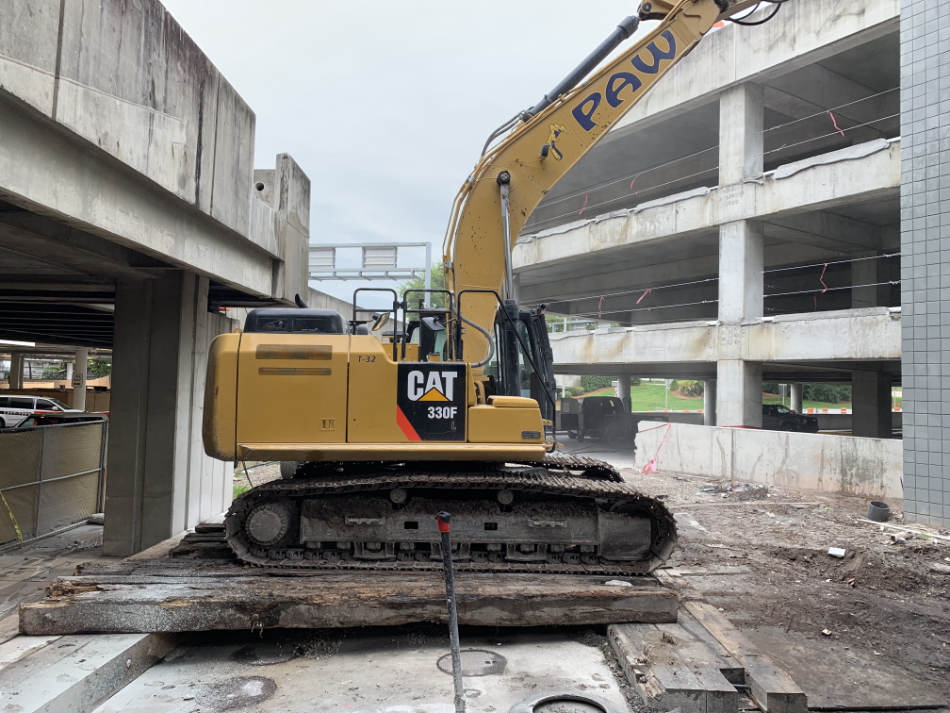
Industrial demolition often requires specialized heavy equipment: high-reach excavators for multi-story structures, concrete processors for mass concrete demolition, shears and pulverizers for structural steel. The right equipment for the job affects both safety and schedule.
A subcontractor with an owned fleet has two key advantages over one that rents:
- Availability is not subject to rental market constraints or competing project demand.
- Equipment is maintained to the contractor’s own standards and subject to their safety inspection schedule.
Ask for a list of owned equipment relevant to the scope. For industrial projects, this should include excavators, demolition attachments, material handlers, and hauling equipment. If the contractor will need to rent anything, ask how rental availability is confirmed before mobilization. PAW Demolition maintains an owned fleet of heavy equipment and handles hauling in-house, so project mobilization is not subject to third-party availability.
In-House Permitting Capability
Permit delays are one of the leading causes of schedule disruption on industrial demolition projects in Florida. Counties vary significantly in their permitting processes and timelines. A contractor that manages permitting in-house, rather than relying on a third-party permit runner or leaving it entirely to the GC, adds a layer of project control that reduces that risk.
In-house permitting means the contractor understands the county-specific requirements, has established relationships with local building departments, and takes ownership of the permit timeline. For projects spanning multiple jurisdictions, this capability becomes even more valuable. You can learn more about permit requirements by county in our guide to Florida demolition permits by county. PAW Demolition manages permitting entirely in-house across Hillsborough, Pasco, Pinellas, Polk, and surrounding counties — no third-party runners, no handoffs.
Relevant Project Experience at the Right Scale
Ask for a project history specific to industrial demolition, not just a general contractor portfolio. Relevant experience should include projects comparable in scope, structure type, and complexity to what you are awarding. Wastewater facility demolition, manufacturing plant teardown, industrial site clearing, and heavy structural work each involve different hazards and methods.
Request references from project owners or GCs on industrial jobs, not just from the sub’s own marketing materials. Contacts at owner organizations and municipalities who have worked with the firm are the most reliable source of honest performance feedback.
Pro Tip: When checking references, ask specifically about schedule adherence, how the sub handled unexpected site conditions, and whether there were any safety incidents. A sub that never encountered a problem on a complex job is either inexperienced or not telling the full story.
Working on an industrial demolition project in Tampa Bay or Central Florida?
PAW Demolition brings 43 years of commercial and industrial experience, a 0.72 MOD rate, an owned equipment fleet, and in-house permitting to every project.
Prequalification Documents to Request
Before awarding industrial demolition work, request the following from every candidate:
| Document | What It Tells You |
|---|---|
| Florida DBPR license verification | License category, active status, and complaint history |
| Current EMR / MOD rate letter | Three-year safety claims performance vs. industry average |
| OSHA 300 and 300A logs (3 years) | Incident frequency and severity by year |
| Certificate of insurance | GL, workers’ comp, auto, and umbrella coverage limits |
| Project reference list (industrial scope only) | Comparable project experience with verifiable contacts |
| Equipment list | Owned fleet relevant to industrial demolition scope |
| Written workforce policy | Confirmation of in-house employee model vs. outsourced labor |
For public agency projects and agency prequalification in Florida, the requirements often go further. Our article on Florida demolition contractor prequalification covers the agency-specific process in detail.
Red Flags to Watch For
A few patterns consistently indicate higher risk when evaluating industrial demolition subs:
- Reluctance to provide a current EMR letter or OSHA logs
- A portfolio that is heavy on residential or light commercial work with limited industrial examples
- Vague answers about workforce model or equipment availability
- No established permitting process and an expectation that the GC will handle all permit coordination
- Pricing that is significantly below market without a clear explanation of how scope is being interpreted
Low bids on industrial demolition are not always a competitive advantage. They are sometimes a signal that scope is being interpreted narrowly, that the contractor plans to use cheaper outsourced labor, or that the bid does not account for conditions that are typical in industrial environments.
Frequently Asked Questions
What license is required for industrial demolition in Florida?
Industrial demolition of buildings, structures over 50 feet, and industrial facilities in Florida requires a Division I contractor license issued by the Florida DBPR. Some industrial facility demolition may also fall under the Industrial Facility Contractor license category. You can verify any contractor’s license status through myfloridalicense.com.
What is a good MOD rate for a demolition contractor?
The industry average EMR is 1.0. Scores below 1.0 indicate better-than-average safety performance. For industrial demolition specifically, an EMR below 0.85 is strong, and below 0.75 typically reflects a contractor with a sustained, documented safety program and low incident frequency over multiple years.
Should a demolition subcontractor handle permitting?
A capable industrial demolition sub should be able to pull their own permits and manage the permitting process through their own team. Contractors with in-house permitting experience reduce scheduling risk and bring county-level familiarity that speeds up approvals, particularly on projects in Hillsborough, Pasco, Pinellas, and Polk counties.
What is the difference between an industrial demolition contractor and a general demolition contractor?
A general demolition contractor may be licensed for residential and light commercial teardowns. An industrial demolition contractor has experience with the specific hazards of industrial environments: confined spaces, process equipment removal, hazardous materials management, and heavy structural demolition. Always verify that a sub’s project history reflects work at the scale and complexity of the project you are awarding.
What should I ask an industrial demolition subcontractor before hiring?
Ask for their current EMR letter, three years of OSHA 300 logs, their Florida DBPR license number and category, a list of comparable industrial projects with owner or GC references, and whether their on-site workforce consists of their own employees or outsourced labor. Also confirm their owned equipment list and in-house permitting capability.
Can a general contractor be held liable for a demolition subcontractor’s safety violations?
Yes. Florida GCs have exposure when a subcontractor’s safety violations result in incidents on a project they are managing. Proper prequalification, including EMR review, insurance verification, and OSHA log review, reduces that exposure and documents due diligence. For a broader overview of OSHA requirements in industrial demolition, see our article on industrial demolition OSHA compliance.