
Quick Answer: A MOD rate (also called an Experience Modification Rate or EMR) is a numerical multiplier that reflects a contractor’s workers’ compensation claims history compared to the industry average. A rate below 1.0 means the contractor has a safer-than-average track record. General contractors and project owners routinely require a MOD rate at or below 1.0 before allowing a demolition subcontractor to bid. PAW Demolition carries a 0.72 MOD rate, putting it 28% below the industry average.
When a general contractor evaluates the MOD rate a demolition contractor carries, price is only part of the picture. Safety performance is often the first filter applied before a bid is even reviewed. One of the clearest, most objective measures of a contractor’s safety culture is the MOD rate, and understanding it can help you make a smarter decision on who to trust with your project.
This guide breaks down what the MOD rate actually measures, how it’s calculated, why GCs and project owners use it as a prequalification threshold, and what a 0.72 MOD rate tells you about a demolition company’s operations.
Key Takeaways
- The MOD rate (Experience Modification Rate) measures a contractor’s workers’ comp claims history against the industry average. A score of 1.0 is average; below 1.0 is safer than average.
- The rate is calculated by the National Council on Compensation Insurance (NCCI) or a state rating bureau using three years of claims data, excluding the most recent policy year.
- Most general contractors require a MOD rate at or below 1.0 for subcontractor prequalification. High-risk or industrial projects often require 0.90 or lower.
- A low MOD rate reduces a contractor’s workers’ comp insurance premiums, which can translate to more competitive pricing on your project.
- Claims frequency drives the MOD rate more than individual claim size. A contractor with many small incidents poses more risk than one with a single isolated claim.
- How to read a MOD rate in context: what the number means for a demolition contractor specifically, and what questions to ask before awarding a bid.
What Is a MOD Rate?
A MOD rate, short for Experience Modification Rate, is a numerical multiplier applied to a contractor’s workers’ compensation insurance premium. It is calculated by the National Council on Compensation Insurance (NCCI) or an equivalent state rating bureau by comparing a company’s actual workers’ compensation claims against what a typical company of similar size and trade classification would be expected to incur.
The result is a decimal number centered on 1.0. A score of 1.0 means the contractor’s loss history matches the industry average. A score below 1.0 means fewer or less severe claims than average. A score above 1.0 means worse-than-average performance.
| MOD Rate | What It Means | Premium Impact |
|---|---|---|
| Above 1.0 | Worse-than-average claims history | Premium increases |
| 1.0 | Industry average | No adjustment |
| 0.85 to 0.99 | Better than average | Premium credit |
| 0.75 or below | Significantly above average safety performance | Substantial premium reduction |
The MOD rate is sometimes called the EMR (Experience Modification Rate), the experience modifier, the x-mod, or simply “the mod.” All of these terms refer to the same number.
Pro Tip: Ask any demolition subcontractor for their current MOD rate certificate before inviting them to bid. The number is independently verified by NCCI or the relevant state bureau, not self-reported by the contractor. If a company hesitates or cannot produce documentation, that is itself a useful data point.
How the MOD Rate Is Calculated
The NCCI uses a formula that compares a company’s actual losses to its expected losses over a rolling three-year period, excluding the most recent policy year. For example, a 2026 MOD rate is calculated using claims data from 2022, 2023, and 2024. The 2025 year is excluded because many claims remain open with unsettled final costs.
The formula accounts for two components of each claim:
- Primary losses represent the first dollars of each claim, up to a threshold set by the rating bureau (currently $18,500 in most NCCI states). These are weighted heavily in the calculation.
- Excess losses represent amounts above that threshold. They are discounted before being factored in, meaning a single catastrophic claim has proportionally less impact than multiple smaller claims.
This structure is intentional. Claims frequency matters more than individual claim size when calculating a MOD rate. A contractor who generates ten minor injury claims in a year signals a systemic safety problem. A contractor who has one serious but isolated claim signals something different. The formula distinguishes between the two.
A company needs at least three years of qualifying claims history before receiving a MOD rate. Newer businesses start at 1.0 by default. Once the experience period populates, the rate updates annually at each policy renewal.
Why the MOD Rate Matters in Demolition Specifically
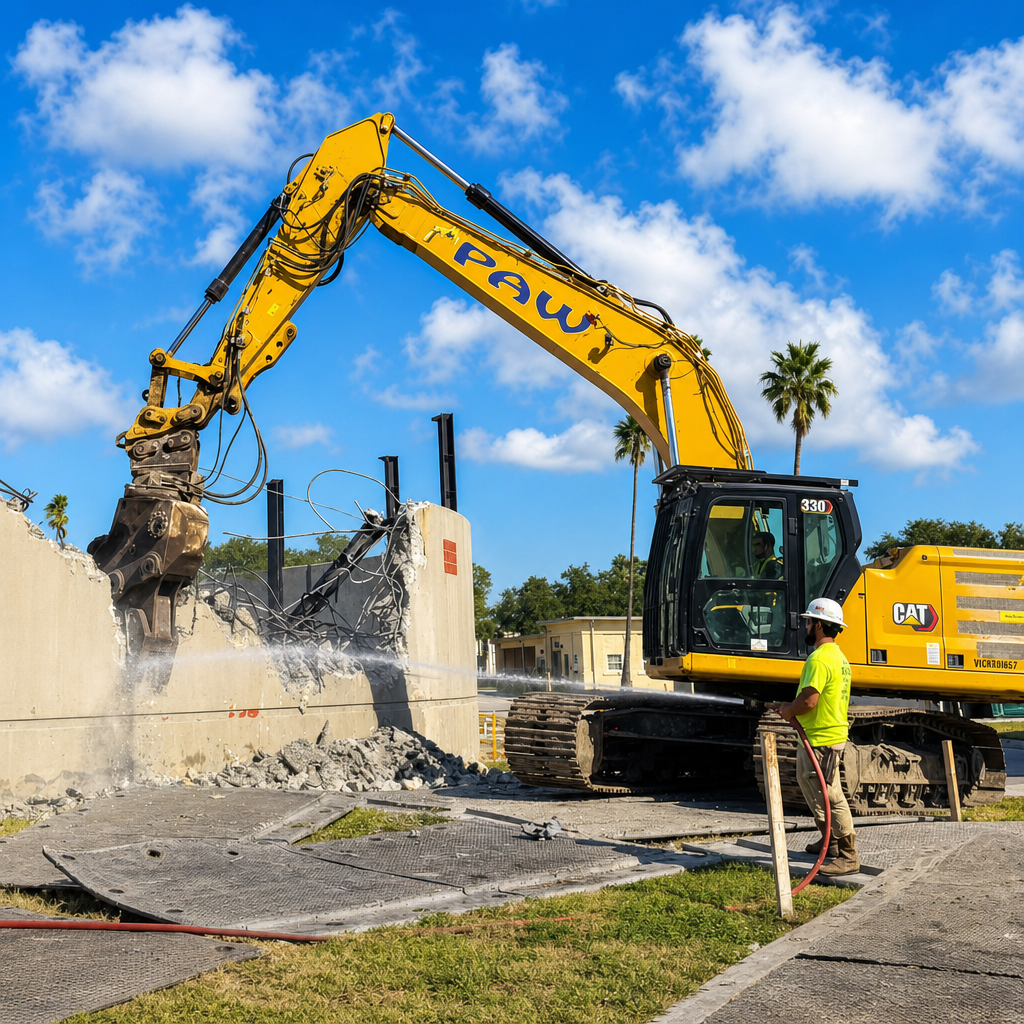 Demolition is classified as high-hazard work. Workers operate heavy equipment, manage structural instability, handle hazardous materials, and work near utilities, underground infrastructure, and public right-of-ways. The baseline risk level is higher than most construction trades, which means the expected loss rates built into the MOD formula already account for that elevated environment.
When a demolition contractor achieves a MOD rate well below 1.0, the comparison is against other demolition contractors, not office-based businesses. A low mod in this context carries more weight than in a lower-risk trade classification.
Three specific reasons the MOD rate matters on demolition projects:
1. Prequalification and bid eligibility
General contractors and project owners use the MOD rate as a hard gate during contractor prequalification. A threshold of 1.0 or below is common on commercial and industrial projects. For federal, DOT, or infrastructure work, many agencies apply stricter cutoffs of 0.90 or lower. A subcontractor above the threshold simply does not make the approved bidder list, regardless of price.
2. Insurance and liability exposure for the GC
When a general contractor brings on a subcontractor with a high MOD rate, that subcontractor’s safety risk can affect the GC’s own consolidated safety metrics and, in some cases, their insurance costs. A demolition sub with a 1.3 MOD is a liability exposure that most GCs would rather avoid. Conversely, a sub with a 0.72 MOD helps protect the project’s overall risk profile.
3. What the MOD rate predicts
The rate is a lagging indicator built on verified loss data spanning multiple years. A consistently low MOD rate cannot be manufactured by a single good year or by managing paperwork. It reflects sustained operational discipline: trained crews, maintained equipment, enforced safety protocols, and active claims management. When you see a contractor holding a 0.72 mod over time in the demolition trade, you are looking at a company where safety practices are embedded in how the work gets done, not just written into a policy binder.
Pro Tip: The MOD rate is a lagging indicator by design. It cannot be inflated by a contractor during bid season. Improvements take two to four years to fully reflect in the rate, which means a low MOD rate today represents demonstrated performance over the prior three policy years, not a recent change in behavior.
Verify Before You Award the Contract
PAW Demolition carries a 0.72 MOD rate. Our safety record, owned equipment fleet, and 43 years of field experience are available to review before you commit to a bid. Talk to us about your project.
How a Low MOD Rate Benefits Your Project
The MOD rate’s effect on your project goes beyond insurance checkboxes. Here is how a contractor’s safety performance translates into direct and indirect value.
Lower insurance premiums create room for competitive pricing
Workers’ compensation premiums are calculated by multiplying the base manual rate by the MOD factor. A contractor with a 0.72 MOD rate pays 28% less in workers’ comp premiums than a contractor at 1.0, all else being equal. That cost structure gives safety-focused contractors more room to price competitively without sacrificing margin, and it means less cost-shifting onto the project through inflated subcontractor overhead.
Fewer project delays from incident management
Every recordable injury on a project triggers an investigation, potential OSHA notification requirements, and in serious cases, a work stoppage. A contractor with a demonstrated low incident rate is less likely to generate the kind of claims that interrupt project schedules. When the OSHA compliance burden is well managed from the start, project timelines stay intact.
The owned equipment connection
Contractors who use subcontracted or rented crews often have less control over the safety culture of the workers actually performing the demolition. When a contractor operates with an owned equipment fleet and direct employees, safety training and protocols are consistent across every job. This operational structure directly supports a low MOD rate. It is not coincidental that demolition companies with owned fleets and no outsourced crews tend to maintain stronger safety metrics.
What PAW Demolition’s 0.72 MOD Rate Represents
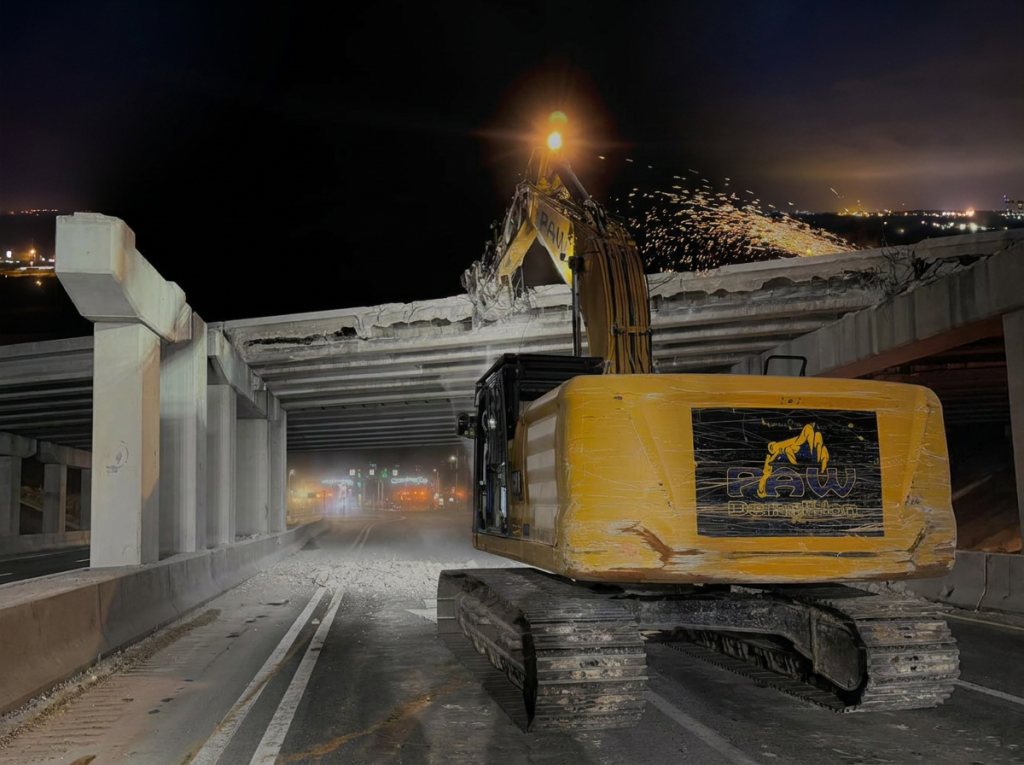 PAW Demolition has maintained a 0.72 MOD rate, placing the company 28% below the industry average for demolition contractors. This figure reflects verified claims performance across three prior policy years in a trade classification where the work includes industrial teardowns, wastewater facility demolition, heavy highway projects, and structural implosions.
A 0.72 MOD rate in commercial and industrial demolition is not a default outcome. It is the result of specific operational commitments:
- An owned equipment fleet, meaning no third-party crews whose safety practices are unknown or uncontrolled
- In-house permitting and project management that keeps the scope and sequencing of hazardous work under direct oversight
- Consistent safety protocols applied across all crew members, not just subcontracted labor on select tasks
- 43 years of institutional knowledge about how to execute high-risk demolition scopes without incidents that generate claims
For general contractors evaluating the experience modification rate of a demolition contractor in Florida, the 0.72 MOD rate is a documented, independently verified measure that simplifies part of the prequalification decision. When vetting demolition subcontractors in Florida, this number is one of the clearest signals available.
Pro Tip: When comparing demolition subcontractors, request MOD rate documentation for the last three consecutive policy years, not just the current year. A single-year figure can mask a trend. Three years of sub-1.0 performance tells a more complete story than any one number.
MOD Rate vs. Other Safety Metrics
The MOD rate is one of several safety metrics used to evaluate contractors. Understanding how it compares to other measures helps you use the right tool for the right question.
| Metric | What It Measures | Best Used For |
|---|---|---|
| MOD Rate (EMR) | Workers’ comp claims history vs. industry peers | Prequalification, insurance pricing, long-term safety trend |
| TRIR (Total Recordable Incident Rate) | Number of OSHA recordable injuries per 100 workers per year | Annual incident frequency benchmarking |
| DART Rate | Days Away, Restricted, or Transferred per 100 workers | Severity of incidents that result in lost or restricted workdays |
| OSHA 300 Log | Itemized log of all recordable workplace injuries and illnesses | Detailed incident review, regulatory compliance verification |
The MOD rate is the most practical single metric for contractor prequalification because it is verified externally, standardized across the industry, and accounts for both frequency and severity of claims over a multi-year period. It is harder to manipulate than self-reported metrics and easier to compare across contractors than OSHA logs that require additional context to interpret.
What to Ask a Demolition Contractor About Their MOD Rate
When you are qualifying a demolition contractor for a commercial bid, the MOD rate conversation should go beyond a single number. Here are the questions worth asking:
- What is your current MOD rate, and can you provide the NCCI or state bureau certificate? This distinguishes verified data from a self-reported claim.
- Has your rate been consistently below 1.0 over the last three years? One good year followed by two bad years tells a different story than sustained improvement.
- Do you self-perform the work with your own employees and equipment? The answer affects whether the MOD rate actually reflects the crew that will be on your site.
- What safety programs do you run to maintain this rate? The MOD rate is an output. Understanding the inputs tells you whether it’s sustainable.
Contractors with a genuine safety culture will answer these questions directly and with supporting documentation. Contractors who stumble on the verification step may not have the rate they claim, or may not understand how their own safety performance works.
The Bottom Line on MOD Rates and Demolition Contractor Selection
- Request a current MOD rate certificate from every demolition subcontractor before issuing a bid invitation. Verify it comes from NCCI or the applicable state rating bureau, not a self-prepared document.
- Apply a 1.0 threshold at minimum for commercial projects. For industrial, infrastructure, or public agency work, consider requiring 0.90 or below.
- Ask for three years of MOD rate history, not just the current figure. Trends matter more than any single number.
- Treat the MOD rate as a proxy for operational discipline. Contractors with consistently low rates have built safety into how they execute work, which reduces your exposure on every phase of the project.
- Cross-reference the MOD rate with whether the contractor self-performs with their own crew and equipment. A low mod from a contractor who outsources labor may not reflect who will actually be on your site.
Plan Your Tear Down
Fast, reliable demolition services from licensed pros with decades of field experience.
Frequently Asked Questions
How does a contractor’s MOD rate affect the cost I pay for the project?
A contractor’s MOD rate affects their workers’ compensation premium, which is built into their overhead and baked into every bid they submit. A contractor paying 28% less on workers’ comp has more pricing flexibility than one carrying a debit mod. The effect is indirect but real: lower insurance overhead means less cost pressure on the bid, all else being equal.
Can a demolition contractor manipulate their MOD rate before bidding?
A contractor cannot manipulate their MOD rate in real time. The rate is calculated by an independent bureau using verified claims data from the prior three policy years, and it updates only at annual policy renewal. A low MOD rate at the time of bid reflects performance from years prior, making it a reliable historical measure rather than a number that can be improved by changing behavior in the weeks before a proposal is due.
Does a subcontractor’s MOD rate affect the GC’s insurance standing?
A subcontractor’s MOD rate can affect the general contractor’s consolidated risk profile and, in some commercial policies, influence the GC’s overall insurance costs. Subcontractors with elevated MOD rates increase the statistical risk exposure on the project. Some commercial insurance policies explicitly require that all subcontractors carry a MOD rate below a defined threshold as a condition of coverage.
How often does the MOD rate update?
The MOD rate updates annually at each policy renewal. The calculation adds one new year of claims data and drops the oldest year from the three-year window. A contractor who has a high-claims year will carry the impact of that year for three consecutive renewal cycles before it ages out of the calculation.
Is a 0.72 MOD rate unusual for a Florida demolition contractor?
A 0.72 MOD rate places a contractor 28% below the industry average for the demolition trade classification. This is not typical. Most contractors with multi-decade operating histories in high-hazard environments carry rates closer to the 0.85 to 0.95 range. Sustaining a rate at or below 0.72 in commercial and industrial demolition requires consistent claims management, low incident frequency, and an operational structure that keeps safety controls close to the field work.
What is the difference between a MOD rate and TRIR?
A MOD rate reflects workers’ compensation claims costs over three years and is calculated by an independent rating bureau. The Total Recordable Incident Rate (TRIR) is an OSHA metric that counts the number of recordable injuries per 100 full-time workers in a given year. The MOD rate is externally verified and more directly tied to financial risk, while the TRIR provides a frequency count useful for year-over-year benchmarking within a company.