
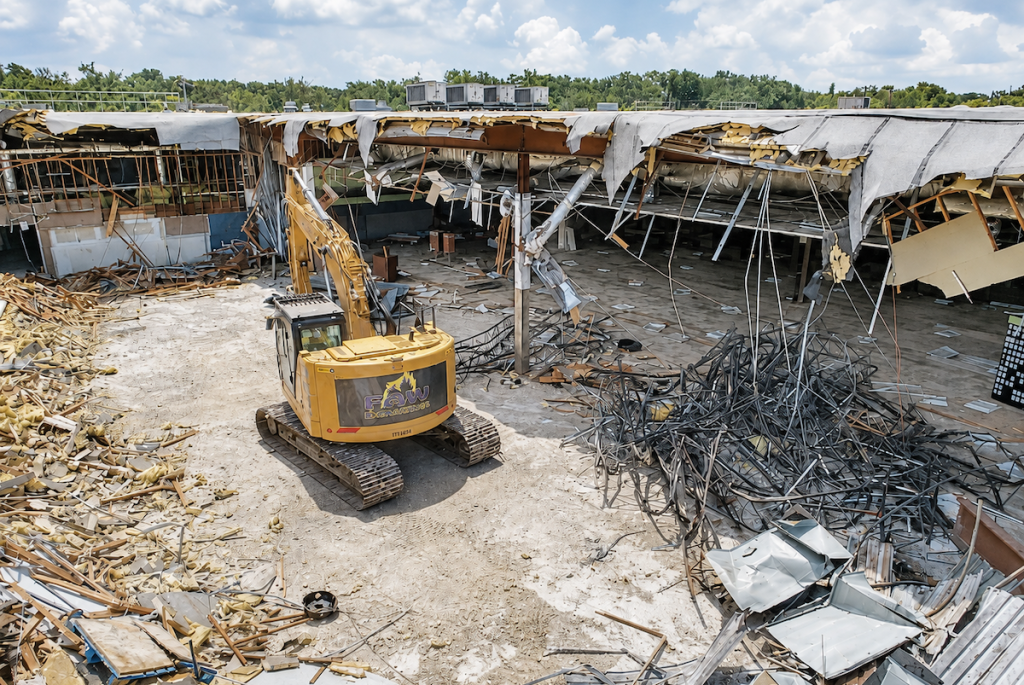
Quick Answer: When evaluating industrial demolition cost in Florida, budget between $6 and $15 per square foot for a full-scope project based on industry estimating benchmarks and PAW Demolition’s completed project data, with total budgets ranging from $150,000 to well over $1 million depending on structure size, environmental conditions, and regulatory compliance. The actual price depends on how many scopes of work your contractor can self-perform versus subcontract.
Cost figures and regulatory references current as of July 2026. Tipping fees, scrap prices, and permit requirements are subject to change.
Key Takeaways
- How structural complexity, hazardous materials, and equipment needs shape your total project cost
- Which line items belong in a full scope demolition budget and how to evaluate them
- Why the cost of delaying demolition often exceeds the cost of completing it
- What separates a detailed, trustworthy bid from a single-number estimate
- How on-site recycling, owned fleets, and self-performed scopes reduce your industrial teardown cost estimate
Why Industrial Demolition Costs More Than Commercial Teardowns
Industrial facilities are not oversized office buildings. Factories, processing plants, wastewater treatment facilities, and distribution centers carry cost factors that standard commercial demolition crews rarely encounter:
- Heavier structural mass. Reinforced concrete, heavy steel framing, and below-grade infrastructure require larger excavators, specialized attachments, and longer processing times.
- Higher contamination risk. Decades of chemical processing, fuel storage, or wastewater handling can leave behind asbestos, lead paint, PCBs, and contaminated soils, each triggering a separate regulatory process and budget line item.
- Complex site conditions. Confined spaces, elevated work areas, underground vaults, and active adjacent operations demand additional safety controls and engineering oversight.
For general contractors, developers, and municipal agencies evaluating industrial demolition cost in Florida, understanding these cost layers upfront prevents scope gaps, change orders, and project delays that erode profitability downstream.
The Core Cost Drivers in a Full-Scope Industrial Demolition Budget
Structural Complexity and Building Materials
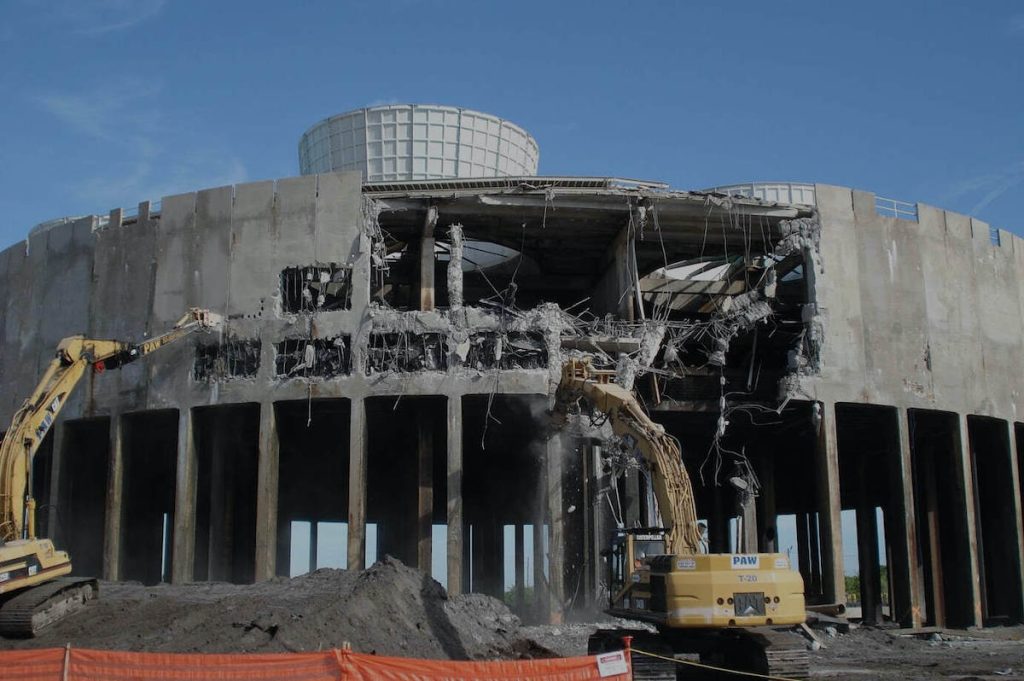 The composition of the structure is the first variable that shapes your industrial teardown cost estimate. Key factors include:
- Material type. Reinforced concrete requires hydraulic breakers, pulverizers, and shears that consume more fuel and take longer to process than steel-framed or wood-framed structures.
- Building height. Multi-story structures add cost through engineered sequencing plans and high-reach excavators.
- Below-grade scope. Deep foundations, pits, vaults, and underground utilities extend the timeline and require excavation beyond a standard above-grade teardown.
Combined, these factors explain why an industrial demolition cost Florida contractors quote often lands higher than early assumptions suggest.
The following ranges reflect industry estimating benchmarks and PAW Demolition’s project history in Florida. Actual costs vary by site conditions and market timing.
| Structure Type | Typical Cost Per Square Foot | Key Cost Factor |
|---|---|---|
| Steel-framed warehouse | $4 – $8 | Scrap credit offsets equipment cost |
| Reinforced concrete facility | $10 – $18 | Hydraulic breakers, slow processing |
| Multi-story industrial plant | $12 – $20+ | Engineered sequencing, high-reach equipment |
| Wastewater or processing facility | $10 – $25+ | Sludge removal, environmental compliance |
These ranges provide a starting framework, but every project carries site-specific conditions that shift the final number. A detailed engineering survey under 29 CFR 1926.850 is required before any demolition work begins, and a qualified industrial demolition subcontractor will include this in their pre-bid scope.
Environmental and Hazardous Material Abatement
For industrial facilities built before the 1980s, environmental abatement is rarely optional. Federal law under the Asbestos NESHAP (40 CFR Part 61, Subpart M) requires a thorough inspection before any commercial or industrial demolition, and a written notification must be filed with the Florida Department of Environmental Protection at least 10 working days before work begins.
When abatement is required, expect these cost impacts:
- Asbestos removal typically adds $2 to $3 per square foot based on PAW Demolition’s completed abatement projects in Florida. This range is not a general industry benchmark and varies with ACM type, contamination level, and access conditions. Severely contaminated facilities can push costs well above that range.
- Lead paint, PCBs, and mercury-containing equipment each carry their own testing, handling, and disposal requirements.
- Multiple contamination conditions can push environmental compliance costs to 15% to 25% of the total budget, depending on the number of regulated materials present and the complexity of removal.
Pro Tip: Request a Phase I Environmental Site Assessment before soliciting demolition bids. Identifying contamination early allows your contractor to price abatement accurately instead of discovering it mid-project, which leads to change orders and schedule delays.
Equipment and Labor
Industrial demolition requires excavators with hydraulic breakers, concrete pulverizers, and grapple attachments, plus wheel loaders, haul trucks, and sometimes cranes. Equipment costs scale directly with project duration. A contractor who owns their fleet eliminates rental markups and controls scheduling without third-party delays.
Labor on industrial projects demands operators trained in confined space entry, fall protection, and hazardous material awareness. A contractor’s Experience Modification Rate (EMR or MOD rate) reflects safety performance relative to industry averages. A rate below 1.0 means fewer workplace injuries than the norm, which affects insurance premiums and the labor cost in your bid.
Waste Disposal, Hauling, and Recycling
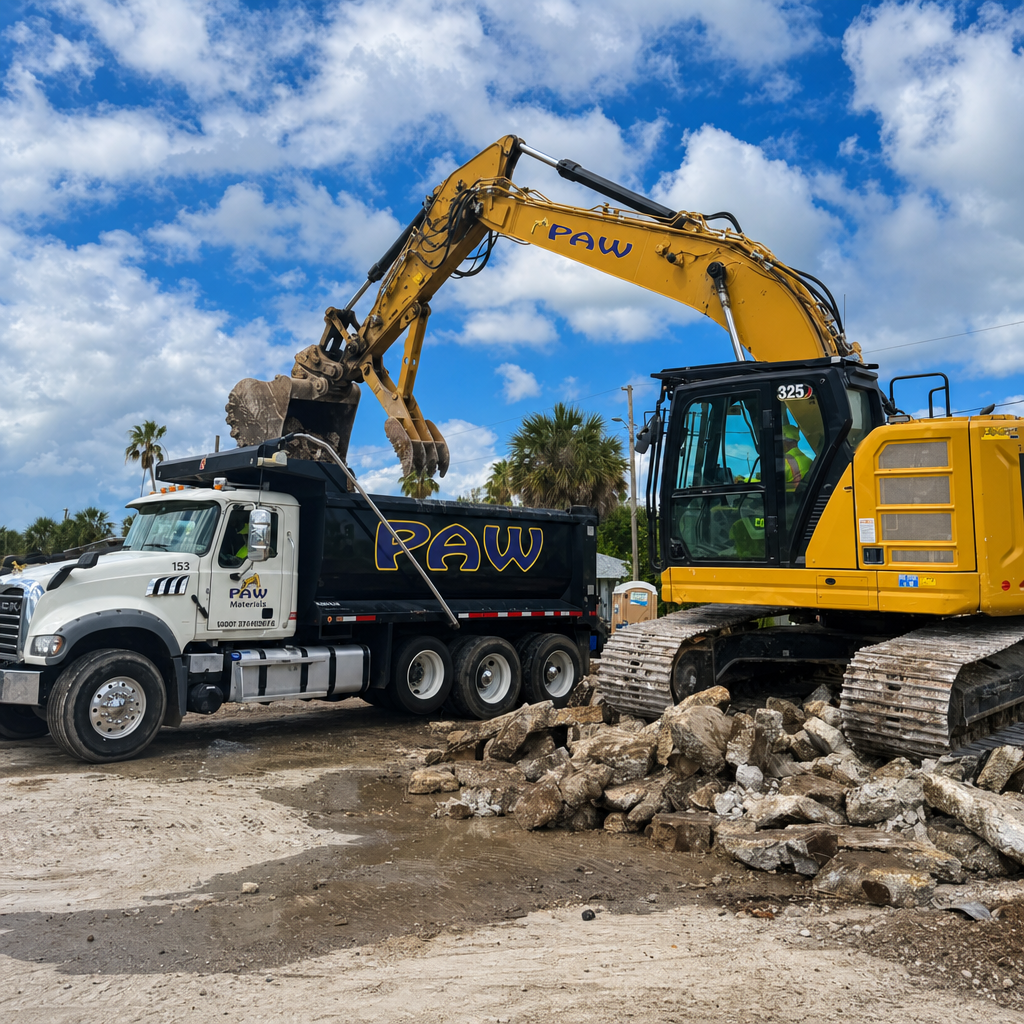 Debris removal can represent up to a third of the total demolition budget. The national average landfill tipping fee reached $62.28 per ton in 2024 according to the Environmental Research and Education Foundation (EREF), with construction and demolition debris in Florida typically ranging from $40 to $65 per ton for mixed loads. A 50,000-square-foot concrete facility generates thousands of tons, so disposal costs compound quickly. Two strategies reduce this line item:
- Concrete recycling. Contractors who operate their own recycling facilities process demolished concrete into reusable aggregates for backfill and site restoration, reducing both hauling volume and tipping fees.
- Steel salvage. Structural steel, rebar, and metal components carry scrap value that should be credited against the project cost. On steel-heavy facilities, salvage credits can reduce net demolition cost by 10% to 20%, though the actual offset depends on current scrap market prices, which fluctuate with commodity cycles.
Permitting and Regulatory Compliance
Industrial demolition in Florida requires permits from the local building department, and depending on scope, additional approvals from county environmental agencies and the Florida Department of Environmental Protection (FDEP). Key permitting considerations:
- Permit fees typically range from $500 to $5,000 depending on jurisdiction and project scale.
- Timeline impact is the real cost driver. Review periods and utility disconnection scheduling can add weeks if not managed proactively.
A contractor who handles permitting in-house absorbs that coordination rather than passing delays back to your schedule.
Site Restoration and Grading
Most contracts require the site to be graded, compacted, and restored for the next phase of development, which may include backfilling below-grade voids, compacting subgrade, seeding disturbed areas, or installing erosion controls.
Site restoration is often where unexpected costs appear. Underground obstructions, unsuitable soils, and previously unknown utilities extend the grading timeline. Contractors who have completed similar full-scope projects, such as PAW Demolition’s work on the Spring Hill Water Reclamation Facility in Hernando County, understand how to price these variables because they have managed them firsthand.
What a Full-Scope Demolition Budget Should Include
A credible industrial demolition bid separates costs into distinct, auditable line items. If a contractor hands you a single lump-sum number, you cannot compare it against competing bids or identify where costs can be reduced. Your full scope demolition budget should include these categories separately:
- Engineering survey and structural assessment
- Environmental testing and hazardous material abatement
- Utility disconnection and capping
- Permitting and regulatory filings
- Structural demolition (above-grade and below-grade)
- Equipment mobilization and demobilization
- Debris hauling, sorting, and disposal
- Recycling credits (concrete, steel, metals)
- Site grading, backfill, and restoration
- Contingency (typically 10% to 15%)
Pro Tip: Compare bids by line item, not by total. A lower price may exclude abatement, grading, or erosion controls that surface as change orders once work begins.
Need a Detailed Industrial Demolition Estimate?
PAW Demolition provides line-item proposals for industrial projects across Florida. With 43+ years of experience, an owned equipment fleet, and a 0.72 MOD rate, we deliver transparent pricing on complex scopes.
Why Delaying Demolition Costs More Than Completing It
For developers, municipalities, and property owners evaluating a redevelopment, the more important question is: what is the cost of not moving forward? An obsolete industrial facility on a developable parcel creates compounding opportunity costs:
- Lost development revenue. Every month a vacant facility occupies a site, income from a new project remains unrealized.
- Delayed tax revenue. Municipalities lose property tax income from higher-value improvements.
- Reduced market attractiveness. Blighted industrial parcels discourage adjacent investment.
- Carrying costs. Property taxes, insurance, security, and environmental liability on a vacant building continue to accumulate.
When the value created by a new project exceeds the industrial demolition cost Florida contractors have estimated, the focus should shift from the demolition price alone to the return on investment the project will generate. On large-scale redevelopments, that math frequently favors moving forward, particularly when carrying costs on the existing structure continue to accumulate.
How Self-Performed Scopes Reduce Your Total Cost
On a typical industrial demolition project, the owner hires separate vendors for demolition, hauling, recycling, and site preparation, each adding overhead and mobilization cost. A full-scope contractor eliminates those layered markups by self-performing multiple scopes under a single contract.
What Self-Performance Looks Like in Practice
For the Spring Hill Water Reclamation Facility project in Hernando County, PAW Demolition self-performed:
- Sludge removal and dewatering
- Structural demolition
- Hauling and site restoration
- Concrete recycling at PAW Demolition’s own facility
That bundled approach kept the $646,541 contract on budget by eliminating vendor coordination delays and reducing disposal costs through in-house recycling. PAW Demolition operates its own heavy equipment fleet, trucking division, and concrete recycling facility, providing single-point accountability from mobilization through final grading.
Pro Tip: When evaluating contractors for a full-scope industrial project, ask how many scopes of work they self-perform versus subcontract. The fewer handoffs between vendors, the lower your risk of schedule delays and budget overruns.
The Bottom Line on Industrial Demolition Cost in Florida
- Budget $6 to $15+ per square foot for industrial demolition in Florida based on industry benchmarks and completed project data, with total costs ranging from $150,000 to over $1 million.
- Require line-item bids that separate structural demolition, abatement, hauling, disposal, recycling credits, grading, and contingency into distinct categories.
- Prioritize contractors who self-perform multiple scopes of work, own their equipment fleet, and operate their own recycling facilities to reduce layered markups and scheduling risk.
- Evaluate the cost of delay alongside the cost of demolition. Lost development revenue, deferred tax income, and ongoing carrying costs often exceed the demolition investment within months.
- Verify the contractor’s MOD rate, licensing, and completed project portfolio before comparing bids on price alone.
Plan Your Tear Down
Fast, reliable demolition services from licensed pros with decades of field experience.
Frequently Asked Questions
How long does a full-scope industrial demolition project take in Florida?
Most industrial demolition projects in Florida take 30 to 120 days from mobilization to final grading, depending on facility size, abatement requirements, and permit timelines. Wastewater facilities or multi-building campuses can extend beyond that range due to phased abatement and regulatory hold points.
Why do industrial demolition bids from different contractors vary so widely?
Bid variation typically reflects differences in scope inclusion rather than pricing. One contractor may exclude abatement, grading, or erosion controls to present a lower total, while another prices every deliverable upfront. Differences in equipment ownership, subcontractor reliance, and contingency assumptions also produce significant gaps. Comparing bids by line item reveals where each contractor’s scope begins and ends.
What is a MOD rate and why does it matter when choosing a demolition contractor?
A MOD rate (Experience Modification Rate) is a multiplier assigned by the National Council on Compensation Insurance (NCCI) that compares a company’s workers’ compensation claims history to the industry average. A rate below 1.0 means fewer claims than typical, which reduces insurance costs and signals a documented commitment to jobsite safety.
What is a reasonable contingency percentage for an industrial demolition budget?
A 10% to 15% contingency is standard for industrial demolition projects where a thorough pre-demolition survey and environmental assessment have been completed. Projects with limited site history or incomplete environmental data may warrant a higher contingency to account for mid-project discoveries requiring additional abatement or disposal beyond the original scope.
What happens if hazardous materials are discovered after demolition has started?
Work in the affected area must stop immediately. Federal and state regulations require the contractor to secure the area, notify the appropriate environmental agency, and engage a licensed abatement contractor before demolition can resume. This is the primary reason a thorough pre-demolition environmental survey is critical, as mid-project discoveries trigger change orders and regulatory penalties.