
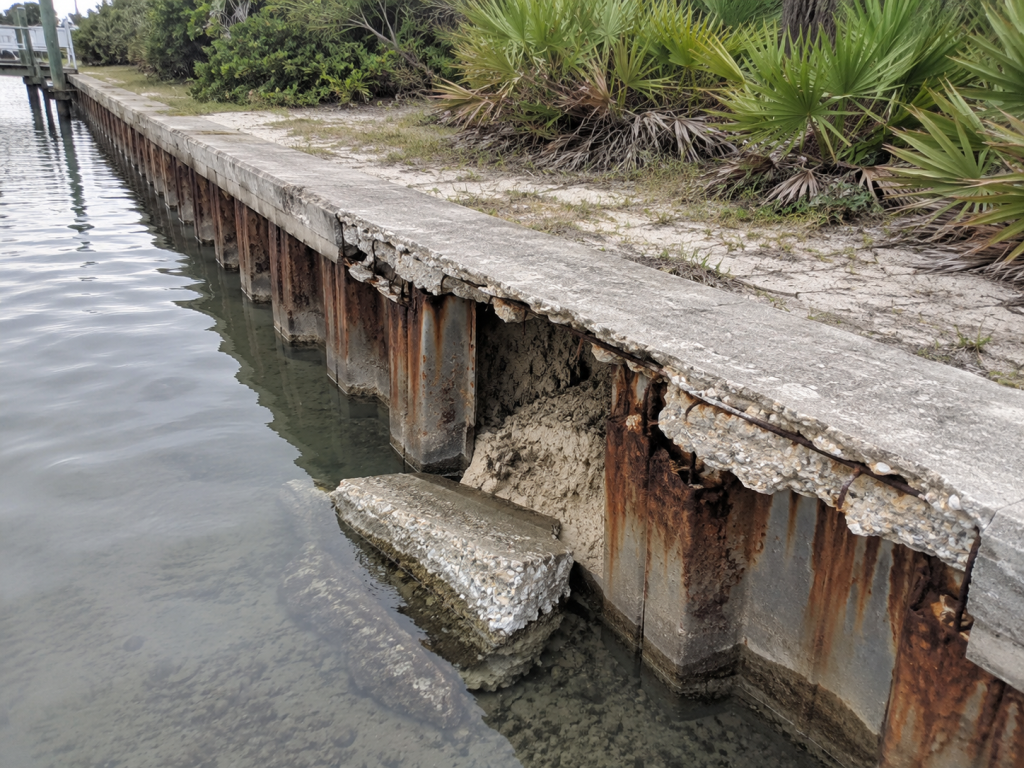
Quick Answer: Seawall and waterfront structure demolition in Florida involves removing concrete caps, extracting steel sheet piles, clearing vegetation, and stabilizing the shoreline with backfill or rip-rap. The process requires Environmental Resource Permits (ERP) from Florida DEP or a local water management district, plus potential U.S. Army Corps of Engineers authorization under Section 10 of the Rivers and Harbors Act. An experienced contractor coordinates the work carefully to protect adjacent shorelines and control sediment.
Key Takeaways
- Seawall demolition follows a strict sequence: vegetation clearing, cap removal, sheet pile extraction, backfill, and shoreline stabilization.
- Florida waterfront projects require ERP permits and often federal Section 10 authorization before work begins.
- Turbidity and sediment control are enforced requirements near Tampa Bay and other protected waterways.
- Rip-rap buffers made from recycled concrete aggregate provide shoreline protection and environmental benefits.
- Contractors who own their equipment, trucking, and recycling operations reduce coordination delays on waterfront projects.
Why Seawall Demolition Is Different From Standard Commercial Demolition
Demolishing a seawall is not the same as tearing down a building. Unlike standard commercial demolition, every component sits at or below the waterline, and the work directly affects tidal flow, adjacent properties, and protected ecosystems. The concrete structures targeted in waterfront demolition Tampa Bay projects have endured decades of saltwater corrosion, wave action, and soil erosion.
What the Scope Typically Includes
- Removing concrete seawall caps
- Extracting steel sheet pile panels
- Clearing associated vegetation
- Hauling and recycling demolition debris
- Stabilizing the exposed shoreline with backfill and rip-rap
Bear Creek Seawall Project: St. Petersburg
PAW Demolition has performed this type of work firsthand. The Bear Creek seawall removal St Petersburg project included demolishing a concrete seawall cap, removing a steel sheet pile wall, clearing vegetation, backfilling with clean soil, and creating a rip-rap shoreline buffer using 8- to 18-inch recycled aggregate. The project was completed alongside PCL Construction and the City of St. Petersburg.
The Anatomy of a Florida Seawall
Before you can plan a seawall demolition, you need to understand what you are taking apart. Florida seawalls consist of several interconnected components.
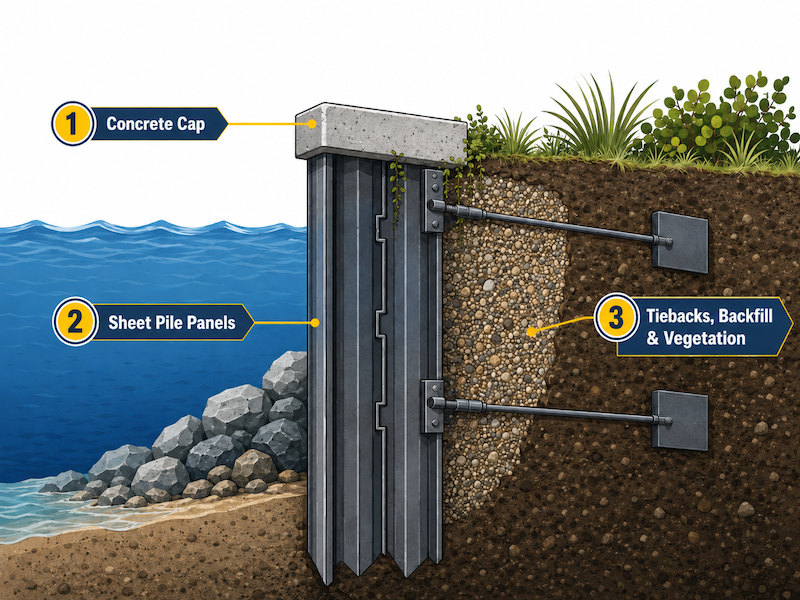
Concrete Cap
The cap is a reinforced concrete beam running along the top of the seawall. It ties adjacent panels together, anchors the tieback system, and provides a finished walking surface. Caps are typically 10 to 16 inches wide and reinforced with rebar. Over time, saltwater corrodes the rebar, causing the cap to crack and spall. When a cap fails, it compromises the tieback system and accelerates the wall’s collapse.
Sheet Pile Panels
Below the cap, interlocking sheet pile panels form the vertical face. These are most commonly steel, though older walls may use concrete or treated timber. Steel sheet piles are driven into the ground and interlock along their edges. Extracting them requires vibratory hammers or hydraulic press-in equipment.
Tiebacks, Backfill, and Vegetation
Steel tieback rods connect the cap to deadman anchors buried in stable soil behind the wall. These anchors resist hydrostatic pressure. During demolition, the tieback system must be addressed carefully because removing the cap before accounting for the tiebacks can cause the remaining wall to shift unpredictably. Behind the wall, compacted backfill supports the upland grade, and vegetation often grows over and through cracks and joints. Clearing this vegetation is one of the first steps in the demolition sequence.
Pro Tip: Before bidding a seawall demolition project, request a structural assessment that identifies tieback condition and void formation behind the wall. Hidden voids from soil erosion through cracked joints can affect equipment staging, safety planning, and hauling logistics.
Step-by-Step: How Seawall Demolition Works in Florida
Every waterfront demolition project follows a deliberate sequence. Skipping steps creates safety hazards and can trigger regulatory violations.
Step 1: Permitting and Pre-Demolition Planning
Any work in, on, or over Florida’s navigable waters requires permits before demolition begins. An Environmental Resource Permit (ERP) from the Florida DEP or the regional water management district covers alterations to surface waters and shoreline structures. At the federal level, Section 10 of the Rivers and Harbors Act requires U.S. Army Corps of Engineers authorization for structure work in navigable waters, including seawall removal and sheet pile extraction. Pre-demolition planning also includes a site survey, utility identification, a sediment control plan, and coordination with adjacent property owners.
Step 2: Vegetation Clearing
Crews clear trees, shrubs, and root systems from the work zone. In Florida, this may require environmental coordination if mangroves, sea grapes, or other protected species are present. Vegetation clearing opens access for heavy equipment and prevents root masses from interfering with cap removal and sheet pile extraction.
Step 3: Concrete Cap Demolition
The concrete cap is removed using hydraulic breakers mounted on excavators. Because the cap anchors the tieback system, crews typically excavate a trench behind the wall first to relieve soil pressure before breaking the cap. Broken concrete is loaded into trucks and hauled to a concrete recycling facility where it can be processed into reusable aggregate. On the Bear Creek project, PAW Demolition processed demolished concrete at its own facility and returned it to the site as rip-rap for the shoreline buffer.
Step 4: Sheet Pile Extraction
Steel sheet piles are typically pulled using a vibratory hammer mounted on a crane or excavator. Extraction must proceed panel by panel in sequence to avoid destabilizing adjacent sections. Older concrete or timber panels may need to be broken in place rather than extracted whole, which generates more debris but avoids fracturing panels and losing material below the waterline.
Step 5: Backfill and Shoreline Stabilization
Once the wall is removed, the exposed bank must be stabilized immediately. Crews place clean fill soil to re-establish the upland grade, then install a shoreline stabilization system. In many Florida projects, rip-rap (large angular stone or recycled concrete aggregate) replaces the vertical wall with a sloped, permeable buffer. Florida DEP and regional water management districts have moved toward encouraging rip-rap and living shoreline approaches over vertical hardening in ERP permits and through programs like the Resilient Florida Living Shorelines initiative, because these methods absorb wave energy, allow transition vegetation to establish between stones, and provide habitat for aquatic species.
Pro Tip: Rip-rap aggregate sizes matter. On PAW Demolition’s Bear Creek project, the specification called for 8- to 18-inch recycled concrete aggregate for the shoreline buffer. Your project’s sizing requirements will depend on wave energy, tidal exposure, and the water management district’s design standards. Undersized material washes out during storm events. Oversized material creates gaps that allow soil migration.
Sediment and Turbidity Control on Waterfront Projects
Florida enforces strict turbidity standards for construction activity near surface waters. In Tampa Bay, where seagrass restoration has been a regional priority for decades, turbidity violations carry significant penalties and can halt a project entirely. Contractors deploy turbidity barriers (floating silt curtains) around the work zone and use silt fencing, stabilized construction entrances, and temporary seeding on the upland side to prevent runoff from carrying sediment into the waterway.
These controls add cost and complexity. They also make contractor selection critical. A safety-focused demolition contractor with waterfront experience already has the equipment, training, and compliance protocols to manage these requirements without delays.
Regulatory Layers: What GCs Need to Know
| Authority | Permit | Covers |
|---|---|---|
| Florida DEP / Water Management District | Environmental Resource Permit (ERP) | Alterations to surface waters, shoreline structures, wetlands |
| U.S. Army Corps of Engineers | Section 10 / Rivers and Harbors Act | Work in, over, or under navigable waters |
| Local Municipality | Demolition Permit | Structural demolition, debris disposal, site restoration |
| Florida DEP | NPDES / Stormwater Permit | Sediment and erosion control near water bodies |
For municipal seawall projects, the permitting process can take months. GCs who bring in a demolition subcontractor early can identify requirements before they become schedule risks. PAW Demolition holds a Division I General Contractor license, which allows the company to pull demolition and construction permits directly on projects that include site grading, backfill, and shoreline restoration.
Planning a Waterfront Demolition Project?
PAW Demolition brings 43+ years of experience to seawall removal and shoreline stabilization across Tampa Bay and throughout Florida. We own our equipment, run our own crews, and operate our own recycling facility.
Why Equipment Ownership Matters
Waterfront demolition requires multiple coordinated capabilities. When evaluating any seawall demolition contractor Florida project managers should ask whether the firm owns or subcontracts these services:
- Excavators with hydraulic breakers for cap demolition
- Cranes with vibratory attachments for sheet pile extraction
- Dump trucks and roll-offs for debris hauling
- A recycling operation for processing concrete into aggregate
Contractors who own everything reduce scheduling conflicts, eliminate vendor markup, and give GCs single-point accountability. On the Bear Creek project, PAW Demolition self-performed every phase and processed demolished concrete at its own facility into the rip-rap used for the shoreline buffer. That closed-loop approach distinguishes qualified contractors on complex port and waterfront facility demolition projects.
Environmental Considerations Unique to Florida Waterfront Work
Florida’s coastal environments are ecologically sensitive. Project permits in Tampa Bay often include conditions that affect demolition scheduling and methods:
- Manatee protection: Projects in manatee habitat typically require compliance with the USFWS Standard Manatee Conditions for In-Water Work, which mandate equipment shutdown if a manatee comes within 50 feet of the operation.
- Sea turtle nesting season: Under Florida’s Marine Turtle Protection Act (Section 379.2431, F.S.) and F.A.C. Rule 68E-1, nesting season runs May 1 through October 31 in Gulf Coast counties, with restrictions on lighting and beach disturbance near nesting habitat.
- Seagrass and mangrove protection: Adjacent beds and stands must be surveyed and protected before work begins.
- Recycled aggregate advantage: Florida DEP recognizes processed concrete as an acceptable shoreline stabilization material, diverting debris from landfills and reducing demand for quarried stone.
Pro Tip: When evaluating a seawall demolition contractor, ask whether they operate their own recycling facility. Control over material grading and delivery timing matters on projects where rip-rap must meet a specific size range.
Common Seawall Demolition Challenges in Tampa Bay
- Limited access and tight staging: Many seawall projects sit on developed waterfront properties. Experienced contractors plan access routes and material storage before mobilization.
- Tidal scheduling: Work at or below the waterline is timed around low tide windows to maximize dry work area and minimize in-water disturbance.
- Aging infrastructure: Many seawalls along Tampa Bay’s Intracoastal Waterway are 30 to 50 years old. Corroded tiebacks and hidden voids create ground conditions that only become visible once demolition begins.
These challenges are what separates experienced heavy civil and infrastructure demolition contractors from general demolition companies.
The Bottom Line on Seawall and Waterfront Demolition in Florida
- Start ERP and USACE Section 10 permitting months before your target demolition date.
- Follow the correct sequence: vegetation, soil relief, cap, sheet piles, backfill, stabilization.
- Budget for turbidity barriers, silt fencing, and ongoing sediment monitoring from day one.
- Hire a contractor who owns equipment, trucks, and a recycling facility for single-point accountability.
- Recycle demolished concrete into rip-rap aggregate on site to cut disposal costs and truck trips.
- Build schedule contingencies for corroded tiebacks and hidden voids behind aging walls.
Frequently Asked Questions
What permits does a seawall demolition contractor need in Florida?
A seawall demolition contractor in Florida needs an Environmental Resource Permit (ERP) from the Florida DEP or the applicable water management district, plus a local demolition permit. Projects in navigable waters also require U.S. Army Corps of Engineers authorization under Section 10 of the Rivers and Harbors Act. The specific license type depends on the scope of work and local jurisdiction requirements.
How long does a typical waterfront demolition project take in Tampa Bay?
Active demolition and shoreline stabilization on a seawall project typically takes two to six weeks, depending on wall length, sheet pile type, and site access. The permitting phase can add several months of lead time, though exact timelines vary by jurisdiction, project complexity, and whether a Nationwide Permit or individual USACE permit is required. GCs should confirm current processing timelines with the applicable water management district and USACE Jacksonville District early in the planning process.
Can demolished seawall concrete be recycled and reused on the same project?
Demolished seawall concrete can be crushed and screened into recycled aggregate suitable for rip-rap, backfill, and stabilization. The material must be graded to the project’s size specification, typically 8 to 18 inches for shoreline buffers. Contractors with their own recycling facilities can process material and return it to the site, reducing waste and trucking costs.
What is the difference between rip-rap stabilization and seawall replacement?
Rip-rap stabilization uses large angular stone or recycled concrete along a sloped bank to absorb wave energy. Seawall replacement installs a new vertical barrier with sheet piles, a reinforced cap, and tiebacks. Florida environmental agencies increasingly favor rip-rap because it creates aquatic habitat, allows vegetation to establish between stones, and reduces wave reflection that can erode neighboring shorelines. The right approach depends on wave exposure, available space, and the intended use of the waterfront.
How do contractors control sediment during waterfront demolition near Tampa Bay?
Contractors deploy turbidity barriers (floating silt curtains) around the in-water work zone to contain suspended sediment. On the upland side, silt fencing and stabilized construction entrances prevent soil from reaching the waterway. Turbidity monitoring is typically required as a permit condition, and violations can result in stop-work orders and daily fines.